


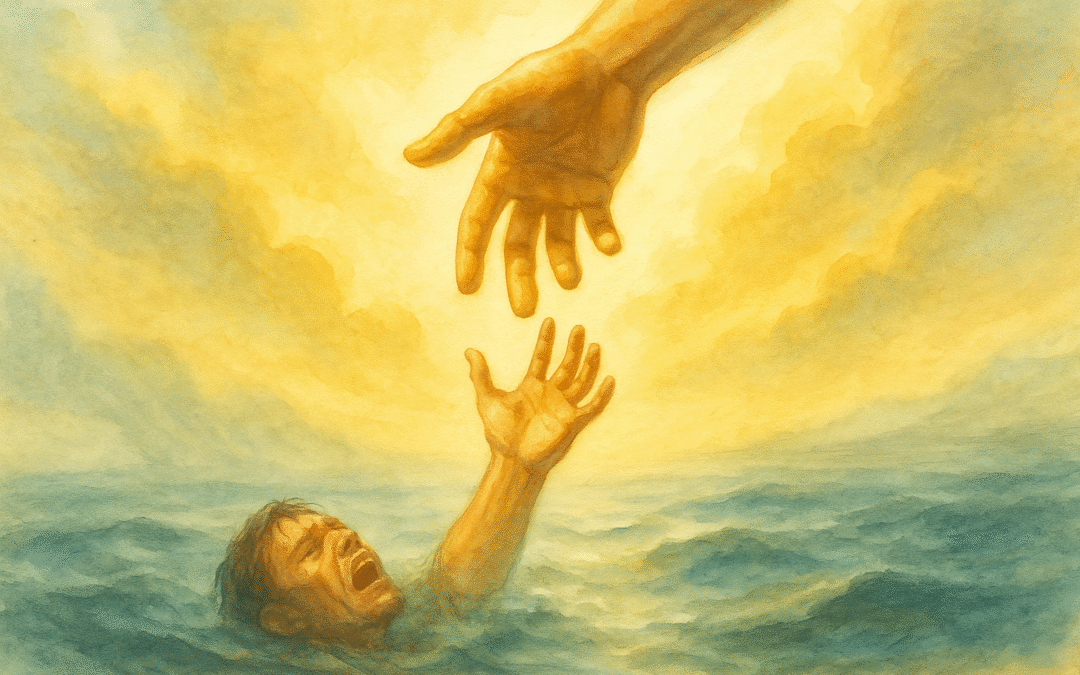
The cross is the most famous symbol in the world. We wear it on necklaces, place it atop church steeples, and ink it on our skin. But if we stop to analyze the historical scene coldly, the cross is grotesque. It is an instrument of torture, humiliation, and public execution.
To the modern skeptic, the central Christian idea—that God required a blood sacrifice to forgive humanity—sounds barbaric, primitive, or even like “cosmic child abuse.”
The question is legitimate and must be faced with intellectual and spiritual honesty: Why couldn’t God just forgive? If He is God, why couldn’t He simply wipe humanity’s slate clean and say, “It’s all good”? Why the violence? Why the blood? Why did Jesus have to die?
In this deep study, we will not offer cliché answers. We will dive into the anatomy of Divine Justice, the gravity of Sin, and the architecture of God’s Love to understand the non-negotiable logic of the Cross.
1. The Diagnosis: The Severity of the Human Problem
To understand the cure (the Cross), we must first accept the diagnosis of the disease. Most of us underestimate what the Bible calls “sin.” We tend to think of sin merely as “making mistakes,” “bad choices,” or “moral failures.”
If sin were just a mistake, God could simply correct us. If it were a disease, He could heal us. But the Bible treats sin as something far more grave: an unpayable debt and a cosmic rebellion.
The Nature of God’s Holiness
The prophet Habakkuk says of God: “Your eyes are too pure to look on evil; you cannot tolerate wrongdoing” (Habakkuk 1:13).
God is not just “good”; He is Holy. God’s holiness means He is absolutely separated from any contamination. He is the very essence of Life, Light, and Justice.
Imagine the sun. The sun doesn’t “decide” to burn what gets close to it out of malice; it burns because that is its nature. Nothing impure can survive in the presence of God’s absolute Holiness.
When humanity decided to live independently of God (Genesis 3), a rupture occurred. Isaiah 59:2 describes this perfectly:
“But your iniquities have separated you from your God; your sins have hidden his face from you, so that he will not hear.”
It wasn’t God who moved away. It was us who, by choosing sin, cut the “oxygen tube” connecting us to the source of Life. The natural result of this disconnection is death—physical, spiritual, and eternal.
2. The Divine Dilemma: Justice vs. Love
Here we arrive at the central knot of Christian theology. God possesses attributes that, to human eyes, seem to conflict in the face of human sin.
- God is Just (The Judge): As Judge of the Universe, He cannot leave crime unpunished. If God saw rape, murder, lies, betrayal, and human arrogance and said “it doesn’t matter,” He wouldn’t be good; He would be morally indifferent. A God who does not have wrath against evil is not a God worthy of worship. Justice demands that the “wages of sin is death” (Romans 6:23). The bill must be paid.
- God is Love (The Father): At the same time, God loves humanity—His creation—with an unconditional and eternal love. He does not want “anyone to perish” (2 Peter 3:9).
This is the Divine Dilemma:
- If God destroys us, His Justice is satisfied, but His Love is frustrated, for He loses the children He loves.
- If God forgives us without punishment, His Love is satisfied, but His Justice is destroyed, for He becomes a corrupt judge who ignores evil.
How can God be, at the same time, “just and the one who justifies those who have faith” (Romans 3:26)? The answer lies in the Cross.
3. The Sacrificial System: The Shadow of Things to Come
To prepare humanity for the answer, God instituted a visual and pedagogical system in the Old Testament: Sacrifice.
When someone sinned in Israel, that person didn’t just say sorry. They had to bring an animal (a lamb, for example) to the temple. The person would place their hands on the animal’s head—symbolizing the transfer of their guilt to that innocent being—and the animal was killed.
Why so much blood? Hebrews 9:22 is categorical:
“In fact, the law requires that nearly everything be cleansed with blood, and without the shedding of blood there is no forgiveness.”
This sounds primitive to us today, but the lesson was vital: sin is so serious that it costs a life. Life is in the blood (Leviticus 17:11). So that you do not die (for your sin), something innocent must die in your place.
But there was a problem: “it is impossible for the blood of bulls and goats to take away sins” (Hebrews 10:4). Those animals were just a “shadow,” a “post-dated check.” They covered guilt temporarily but did not remove it. They pointed to the need for a Perfect Substitute. A real human being, yet without sin, who could pay the human debt once and for all.
4. The Prophecy of the Suffering Servant
700 years before Jesus was born, the prophet Isaiah wrote a text that describes with surgical precision what would happen on the Cross. In Isaiah 53, we see the doctrine of Penal Substitutionary Atonement (someone paying the penalty in place of another).
“Surely he took up our pain and bore our suffering… But he was pierced for our transgressions, he was crushed for our iniquities; the punishment that brought us peace was on him, and by his wounds we are healed.” (Isaiah 53:4-5)
Notice the words: “our transgressions,” “our iniquities.” But who was pierced? “He.”
This is the great exchange.
5. The Cup of Wrath: What Happened on the Cross?
The night before his death, Jesus was in the Garden of Gethsemane in deep anguish, sweating drops of blood. He prayed: “My Father, if it is possible, may this cup be taken from me” (Matthew 26:39).
What was in this cup?
Many think Jesus was afraid of physical pain—the nails, the Roman whip. While physical pain was terrible, many martyrs in history faced death singing. Why was Jesus so terrified?
Because the cup did not just contain physical death. It contained the Wrath of God.
The cup represented all of God’s just indignation against all the sin of humanity—past, present, and future. All the filth, all the hatred, all the human perversion would be poured out onto Jesus.
On the Cross, a cosmic and spiritual event took place.
- The Imputation of Sin: God treated Jesus as if He had committed all your sins. Jesus became “sin for us” (2 Corinthians 5:21).
- The Abandonment: For the first time in eternity, the perfect communion of the Trinity was interrupted. Jesus cried out: “My God, my God, why have you forsaken me?”. He was abandoned so that you would never have to be.
Jesus absorbed the full impact of Divine Justice. He was the lightning rod that attracted the storm of God’s judgment so that we could enjoy the sunshine of His grace.
6. The Legal Logic: Tetelestai
In the final moment, Jesus didn’t say “I am dying.” He shouted a Greek word: Tetelestai.
In ancient times, this word was used in commerce and courts. It meant “Paid in Full” or “The debt has been settled.”
The Cross was not a defeat. It was a payment receipt.
The infinite debt humanity owed God was paid off by an infinite being.
- Justice was satisfied: Sin was punished in the person of Christ. The Judge did not ignore the law.
- Love was released: Now, God can forgive the sinner without ceasing to be just.
Paul explains this masterfully in Romans 3:23-24:
“for all have sinned and fall short of the glory of God, and all are justified freely by his grace through the redemption that came by Christ Jesus.”
Justification vs. Forgiveness
What we gain on the cross is more than forgiveness. If you forgive someone who broke your vase, the vase remains broken.
Justification is a legal term meaning God declares us “Righteous.”
It is “Double Imputation”:
- Our sins went to Jesus’ account.
- Jesus’ perfect righteousness came to our account.
When God looks at you today, if you are in Christ, He doesn’t see your sins. He sees the holiness of His own Son.
7. Conclusion: Is the Cross the Only Way?
We live in an age that detests exclusivity. We want to believe that “all paths lead to God.” But the logic of the Cross prevents us from thinking this way.
If there were any other way to save humanity—by good works, by meditation, by charity, by moral evolution—then Jesus’ death would have been a tragic and unnecessary waste. If God could save us another way, why would He let His Son be tortured?
The fact that Jesus died proves that there was no other way. The debt was too high for us to pay.
The Cross tells us two things simultaneously:
- You are more sinful than you imagine: It took the death of the Son of God to save you. This destroys our pride.
- You are more loved than you ever dared to dream: The Son of God volunteered to die for you. This heals our insecurity.
Why did Jesus have to die?
Because He loves you too much to lose you, and He is too Just to ignore what kills you.
The Cross is the place where Perfect Justice and Infinite Love kissed. And the invitation today is simple: stop trying to pay a bill that has already been settled. Believe, receive, and live free.
Did you like this article? If you want to deepen your walk with God in a light and guided way, check out our e-book “Start Here”. A 7-day journey to rediscover peace through the Gospel of John. Click here to learn more.
Did you like this study? This level of depth is what we strive for at Hearing Him. If you want to start reading the Bible with this understanding, but in a guided and accessible way, check out our guide “The Grand Plan”.