


Series: The Crucible of Faith
Biblical Text: 2 Timothy 1:8-18; 4:9-22 (NIV)
Estimated Reading Time: 15 minutes
Cinematic Introduction (The Hook)
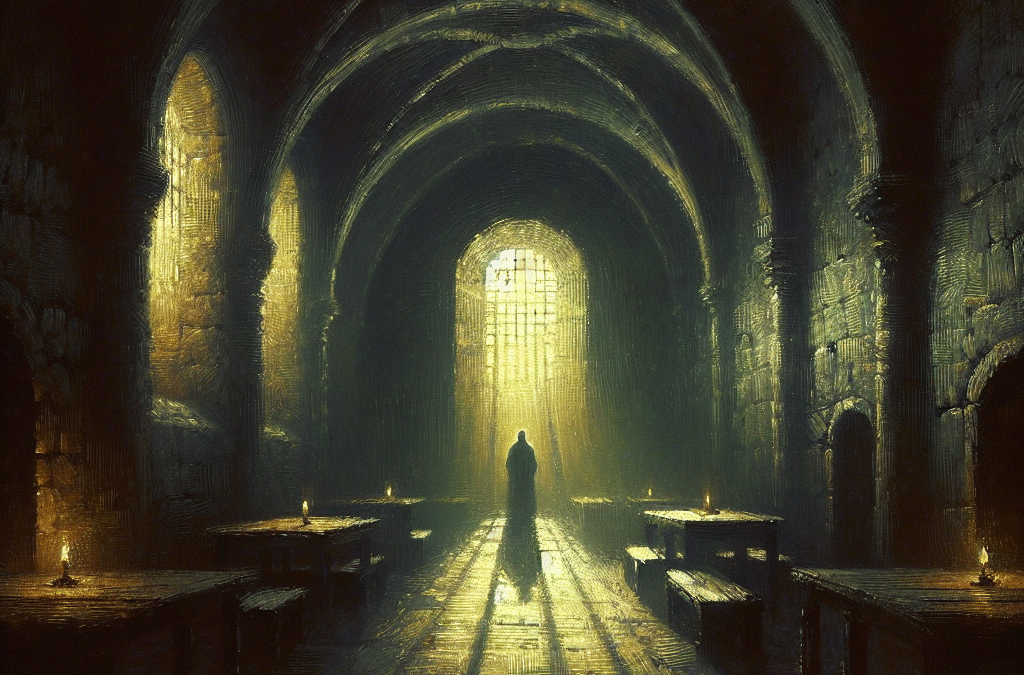
Imagine the scene. Rome, circa 67 AD. The air in the Mamertine Prison is thick with the stench of damp earth, human waste, and despair. It is not a cell but a pit—a circular, subterranean dungeon carved from tufa rock. A single hole in the ceiling admits a sliver of gray light and the occasional flurry of cold rain. The floor is perpetually wet. Chains chafe against raw wrists. The body of the prisoner, an old man now, aches with the cold that seeps into bones. He is alone. His friends have scattered to the provinces, some having deserted him. His work appears to be unraveling. He awaits not a trial, but an executioner’s sword. This is the Apostle Paul’s final winter.
Yet from this pit of abandonment, this ultimate winter of the soul, flows not a cry of bitter defeat, but the warm, steady, and astonishingly hopeful words of 2 Timothy. Here is the paradox. In the place of deepest human loneliness, we find the most profound testimony of divine companionship. In the season of apparent ending, we discover the seeds of legacy that would outlast an empire.
This tension between external circumstance and internal reality is our own. We know the chill of isolation—not in a Roman dungeon, but in a quiet house, a crowded yet lonely office, a season of illness, or a church pew where we feel unknown. We face the winter of the soul when dreams die, relationships fracture, and God seems silent. The world offers two escapes: the frantic heat of hedonistic distraction or the cold stoicism of grim endurance. Paul’s letter offers a third way: a sacred fire that burns in the dungeon, fed not by circumstance, but by a Person.
Today, we study the theology of solitude in 2 Timothy. We will discover how the winter of the soul, rightly endured in Christ, becomes not a season of death, but a necessary dormancy where the roots of faith grow deepest, preparing for an eternal spring.
Theological Development
I. The Anatomy of the Dungeon: Historical & Cultural Context
- The Mamertine (Career Tullianum): This was Rome’s most feared prison. Reserved for enemies of the state, it was a holding cell for execution. To be here was to be stripped of all status, hope, and human comfort. Paul was not under house arrest (as in Acts 28). This was the end. Understanding this location is crucial. Paul writes not as a respected rabbi in a rented house, but as a condemned criminal in a hole. His authority derives solely from his apostolic calling, not any earthly position.
- The Desertion of Friends: Names punctuate the letter like wounds: Demas, in love with the present world, has gone to Thessalonica (4:10). Crescens to Galatia, Titus to Dalmatia (4:10-12). Only Luke remains (4:11). Most painfully, at his first defense, “no one came to my support, but everyone deserted me” (4:16). In a culture built on patronage, friendship (philia), and loyalty (pistis), this was a social and personal catastrophe. The dungeon’s physical cold was matched by the relational freeze.
- The Philosophical Alternatives: A Roman in Paul’s situation might adopt Stoicism, seeking apatheia (freedom from passion) through sheer will, accepting fate with grim dignity. An Epicurean might seek fleeting pleasure to numb the pain. Paul submits this human predicament to the Gospel, transforming solitude from a curse into a curriculum.
II. Exegesis of Key Passages: The Fire in the Pit
A. 2 Timothy 1:8-12 – The Foundation of Unashamed Suffering
- “Do not be ashamed of the testimony about our Lord or of me his prisoner.” (v.8): The Greek for ashamed (epaischynomai) implies a recoiling from association due to disgrace. Paul links the testimony of Christ with the shame of his chains. He calls Timothy—and us—to a counter-cultural solidarity that embraces the scandal of the cross and its consequences.
- “By the power of God, who has saved us and called us to a holy life…” (vv. 8-9): The power (dynamis) of God is the engine. Our calling is not first to effectiveness or comfort, but to holiness (hagiō), a life set apart. This divine power is made perfect in human weakness (2 Cor. 12:9), especially in the weakness of imprisonment.
- “I know whom I have believed…” (v.12): This is the cornerstone. Paul does not say *“I know *what* I have believed,”* though his theology is precise. He says “whom” (hon). His confidence is in the character and faithfulness of a Person, Jesus Christ. The Greek verb pisteuō (have believed) is in the perfect tense, indicating a past action with continuing, present results. His trust is an ongoing, settled state. The dungeon cannot shake the settled conviction of a heart anchored in Christ.
B. 2 Timothy 4:6-8, 16-18 – The Paradox of Victory in Abandonment
- “I am already being poured out like a drink offering…” (v.6): The language is liturgical, sacrificial. Paul sees his imminent death not as a tragic waste, but as a final act of worship, completing his offering (Phil. 2:17). His life is the libation poured on the altar of Christ’s sacrifice.
- “I have fought the good fight… there is in store for me the crown of righteousness.” (vv.7-8): He uses three metaphors: the athletic contest (agōn), the military campaign, the race. All imply struggle, focus, and a finish line. The crown (stephanos) is the victor’s wreath, here identified as righteousness—the ultimate vindication and approval from the Divine Judge. Man’s justice condemns him to a dungeon; God’s justice crowns him with righteousness.
- “But the Lord stood at my side…” (v.17): After the devastating report of human desertion (v.16), this is the glorious contrast. The Greek paristēmi means to stand beside, to assist, to be present. In the moment of ultimate human loneliness, the presence of Christ was experientially real. He was not “with Paul” in a vague spiritual sense; He stood at his side as a faithful friend and advocate. This is the heart of the winter’s theology: God’s presence is most powerfully known in the experience of human absence.
III. A Theology of Sacred Solitude: Winter as a Season of Grace
- Solitude vs. Loneliness: The world knows loneliness (erēmia – a desolate place), a state of lack and anguish. The Gospel creates the possibility of sacred solitude, a monos (alone) with God. It is the difference between an empty room and a focused meeting. Paul’s dungeon was a place of crushing loneliness transformed, by faith, into a sanctuary of unparalleled divine communion. The winter strips away the foliage of busyness and human approval, forcing us to see what our faith is rooted in.
- The Refining of Legacy: Winter in nature is not death; it is dormancy and conservation. Energy retreats to the roots. In the soul’s winter, what is superficial dies back. What remains is the essential, deep-rooted gospel. Paul, unable to travel or plant new churches, does his most enduring work: he writes to Timothy. He invests in a single person. From the pit flows Scripture. The enemy intended to silence a voice; God used the silence to amplify it for millennia. Our most impactful legacy is often forged not in the summer of success, but in the winter of limitation.
- The Supremacy of Christocentric Hope: Paul’s hope is not a vague optimism (“things will get better”). It is a confident expectation (elpis) fixed on the return of Christ and the resurrection (4:8, 18). His present reality is defined by this future certainty. This breaks the tyranny of the present moment. The dungeon is real, but it is temporary. The crown is unseen, but it is eternal. This worldview dismantles both Hedonism (which lives for the present pleasure) and Stoicism (which endures the present with grim resignation), replacing them with a vibrant, future-oriented endurance filled with present-tense joy.
Application & Closing
Practical Application: Protocols for the Spiritual Winter
How do we live this on a Monday morning in our own seasons of cold isolation?
- The Protocol of Honest Lament: Do not stoically deny the chill. Follow the Psalmist and Paul. Name the desertion, the fear, the cold. Bring your “why?” to God. Sacred solitude begins with raw honesty, not pious pretense. Journal your pain as a prayer.
- The Protocol of Anchored Identity: Regularly declare, *“I know *whom* I have believed.”* Write it down. When feelings of shame or abandonment surge, anchor yourself not in your changing circumstances or failing relationships, but in the unchanging character of Christ. Your identity is “in Christ,” not “in comfort,” “in community,” or “in productivity.”
- The Protocol of Micro-Legacy: In your season of limitation, ask: “Who is my Timothy?” You may not be able to do what you once did. To whom can you pass on a word of encouragement, a prayer, a piece of wisdom, a testimony of God’s faithfulness? Send the letter. Make the call. Your dungeon can become a desk for divine correspondence.
- The Protocol of Presence-Seeking: Actively look for where the Lord is standing at your side. It may be in a sudden sense of peace, a timely Scripture, a memory of His faithfulness. The discipline of gratitude is the furnace that heats the dungeon. Thank Him for His presence before you thank Him for a change in circumstance.
Epic Conclusion
The winter of the soul finds its ultimate meaning and resolution in the Person of Jesus Christ. He is the One who entered the ultimate dungeon of God-forsakenness on the cross, crying, “My God, my God, why have you forsaken me?” (Matthew 27:46). He endured the absolute winter of divine wrath so that in our winters of human loneliness, we could know the promise, “I will never leave you nor forsake you” (Hebrews 13:5).
Paul’s dungeon was not a sign of God’s abandonment, but a sharing in Christ’s sufferings (Philippians 3:10). The same Lord who stood with Paul in the Mamertine Prison stands with you in your isolation—your lonely home, your hospital room, your season of loss. He is the Divine Companion who makes the solitary place a holy of holies. He is the Resurrection who guarantees that no winter is the final word. The dungeon, therefore, is not your end. It is the unlikely forge where a faith that can outlast empires is tempered. It is the dark soil where the roots of eternal life drive deep. It is the silent night before the glorious dawn of resurrection.
Look to Jesus, the author and perfecter of our faith, who for the joy set before him endured the cross, scorning its shame, and sat down at the right hand of the throne of God (Hebrews 12:2). Your winter, united with His, is already yielding to an everlasting spring.
“But the Lord stood at my side and gave me strength, so that through me the message might be fully proclaimed and all the Gentiles might hear it. And I was delivered from the lion’s mouth. The Lord will rescue me from every evil attack and will bring me safely to his heavenly kingdom. To him be glory for ever and ever. Amen.”
— 2 Timothy 4:17-18 (NIV)
Postagens/Posts/Publicaciones
- “Is It God or Is It Just My Head?” The Ultimate Guide to Stop Guessing and Start Discerning
- “Show Me Your Glory”: The Mystery of the Cleft of the Rock and the Safe Place in Jesus
- A Kenosis: The Emptying of Glory (Philippians 2)
- Anxiety and Faith: Is it a sin to take medication or go to therapy? What the Bible really says
- Celestial Breaking News: “New Year” Doesn’t Exist in the Bible? A Deep Investigation into the Theology of New Beginnings
- Celestial Breaking News: The Day Heaven Invaded Earth (The True Story of Christmas You Never Heard)
- Christmas Investigation: Does the Bible Reveal the Exact Day Jesus Was Born? (The Mystery of Tabernacles)
- Church or Cult? The Ultimate Biblical Guide for the New Convert to Find a Safe Spiritual Home
- Corinth: Sacred Monday (Tentmaker’s Work)
- Ephesus: The Theater of Shadows (Spiritual War and Culture)
- Ephesus: The Theater of Shadows (Spiritual Warfare and Culture)
- First Steps with Jesus: A Biblical Guide to Start Your Journey of Faith
- From Failure to Rock: The Denial and Restoration of Peter.
- From the Pit to the Palace: When God’s Presence Feels Like Absolute Silence
- Fruit vs. Gifts: The Priority of Character
- God’s Radar: Integrity and the Gaze of God (2 Chr 16:9)
- Grace in Lo-debar: The King’s Call (Mephibosheth / 2 Samuel 9)
- I Converted, But I Sinned Again: The Liberating Truth About Your Internal Struggle
- I Find Reading the Bible and Praying Boring: How to Overcome Spiritual Boredom and Build Consistency
- Jerusalem/Rome: The Compass (The End of the Race)
- Justification: The Courtroom of Grace
- Melchizedek: The King Without Genealogy
- Nicodemus: The Theologian in Darkness (The New Birth)
- Real Life #1: “How to Share Jesus with My Family Without Starting World War III” — The Ultimate Guide to Home Evangelism
- Real Life #2: “Do I Really Need to Get Baptized? What Really Happens in the Water” — The Ultimate Guide to the Public Wedding with Christ
- Real Life #3: “Did God Call Me? How to Discover My Purpose Without Becoming a Pastor” — Ending the Sacred-Secular Divide
- Real Life #4: “Christian Dating vs. Hookup Culture: The Survival Manual for Singles” — Purity, Purpose, and the Physics of Being Unequally Yoked
- Real Life #5: “Tithes and Offerings: Is God Broke or Am I Greedy?” — Money as a Spiritual Thermometer
- Silence in Chaos: Why Having Faith Doesn’t Make You Immune to Anxiety (And How to Find Real Peace)
- Silence is Not Absence: A Deep Guide to Resetting Your Frequency and Finding the Overflow of Purpose
- Spiritual Detox #1: “I Accepted Jesus, Now My Problems Will End” — The Big Lie and the True Promise
- Spiritual Detox #2: “Do I Have to Cut Off Non-Christian Friends?” — The Definitive Guide to the “Holy Bubble”
- Spiritual Detox #3: “Christians Don’t Get Depressed?” — Breaking the Mental Health Taboo in the Church
- Spiritual Detox #4: “Can the Devil Read My Thoughts?” — The End of Paranoia and True Spiritual Authority
- Spiritual Detox #5: “I Don’t Feel God, So He’s Not Listening” — The Danger of Goosebump-Based Faith
- Spiritual Detox #6: “If I Sin, Does God Walk Away and Stop Loving Me?” — The Survival Guide for the “Spiritual Hangover”
- Spiritual Detox #7: “Do I Have to Become a Boring Christian?” — The End of the ‘Do’s and Don’ts’ List and True Holiness
- Start Here: 7 Days to Hear God (Reading John)
- The Abyss of Glory: The Depth of the Riches (Romans 11:33).
- The Anatomy of a Heart: Why Did God Love Such an Imperfect Man So Much?
- The Art of Abiding: Prayer, Discipleship, and the Secret of Consistency
- The Art of Provocation: Communion and Mutual Encouragement in Hebrews 10:24
- The Art of Provocation: Communion and Mutual Encouragement in Hebrews 10:24
- The Crimson Mystery: The Theology, Legality, and Power of “Pleading the Blood”
- The Dungeon: The Winter of the Soul (Solitude/2 Timothy)
- The Emmaus Bread: Eyes Opened in Communion (Luke 24).
- The Eternity Code: Forensic Evidence That the Bible Is the Word of God
- The Final Metanoia: What It Really Means to Have the Mind of Christ
- The Great Discovery of December 31st: The End of Waiting (The Kingdom is Now)
- The Great Plan: The Architecture of Rescue (When the Fall Meets Grace)
- The Great Plan: Understanding the “Exchange” That Changes Everything
- The Importunate Friend: A Theology of Persistence
- The Incomparable #1: “The Terrorist of Tarsus: How God Turns His Worst Enemy Into His Greatest General”
- The Incomparable #10: The Last Breath — The Death of the Servant vs. The Death of the Atheist (Final Special)
- The Incomparable #2: “The Arabian Desert: Why Does God ‘Hide’ Those He Plans to Use?” — The Secret Power of Anonymity
- The Incomparable #3: The Fight with Barnabas and the Cost of Leadership
- The Incomparable #4: When Heaven Says “No” (The Frequency of the Spirit)
- The Incomparable #5: The Overflow — When the Gospel Faces Culture (Paul in Athens)
- The Incomparable #6: Silence in Chaos — The Theology of the Shipwreck (Paul in Acts 27)
- The Incomparable #7: The Art of Letting Go — The Radical Theology of Forgiveness (Paul and Philemon)
- The Invitation of the Maimed: The Parable of the Great Banquet
- The Invitation of the Maimed: The Parable of the Great Banquet
- The Iron Mask: Why We Feel Like a Fraud and How to Cure Spiritual Imposter Syndrome
- The Judgment of the Nations: The Sheep and the Goats
- The Kairos of God: Sovereignty Over Time in Eternity
- The Logic of Blood: Why was Jesus’ death the only solution?
- The Mirror: The Death of the Slave, The Birth of the Son
- The Orphan Syndrome: Why Do You Keep Acting Like a Slave When You Already Have the House Keys?
- The Place of the Sinner: The Alabaster Jar (Luke 7).
- The Prince, The Shepherd, and The Deliverer: When the Desert Is the Only School
- The Prison of Resentment: How to forgive someone who never said “I’m sorry”
- The Rich Young Ruler: The Tragedy of Almost-Salvation
- The Samaritan Woman: The Forgotten Jar at the Well
- The School of Prayer: How to Learn to Speak the Language of Heaven
- The Seal of the Spirit: Pledge and Property
- The Secret of the Secret Place: The Intimacy that Pleases God (Martha and Mary)
- The Shrewd Manager: Investing in Eternity
- The Sound of Silence: What God Was Doing When He Stopped Speaking
- The Tabernacle: The Engineering of Presence
- The Table in the Wilderness: The Valley of the Shadow (Psalm 23).
- The Table of Betrayal: The Dipped Bread (Judas and Rejected Grace)
- The Table of Betrayal: The Dipped Bread (Judas and Rejected Grace)
- The Ten Virgins: The Danger of Borrowed Oil
- The Terror of God (The Invisible War)
- The Upside-Down Kingdom: Why Jesus’ Logic Offends Our Human Logic
- The Widow of Nain: When Two Processions Meet
- Tongues of Fire or Strange Fire? The Gift of Tongues, Paul, and the Ghost of Montanism
- When Heaven is Silent: A Survival Guide for the “Dark Night of the Soul”
- Zacchaeus: The Tree of Curiosity