


Series: The Upside-Down Kingdom
Biblical Text: Luke 14:15-24 (NIV)
Estimated Reading Time: 15 minutes
Cinematic Introduction (The Hook)
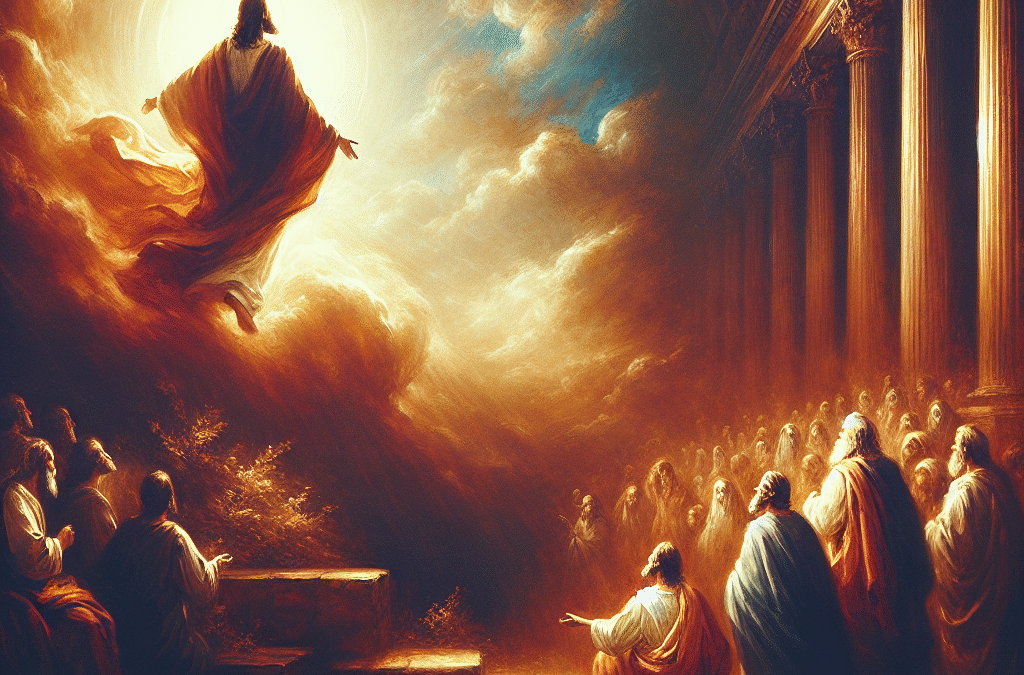
Imagine the scene. The air is thick with the aroma of roasting lamb and freshly baked bread. Sunlight filters through the latticework of a prominent Pharisee’s courtyard in Judea. The table is set with fine pottery. The guests recline on cushioned couches, their robes clean, their status secure. They are the respected, the righteous, the established. Among them sits Jesus, watching. The conversation turns pious. A guest, perhaps trying to flatter or test the atmosphere, declares, “Blessed is the one who will eat at the feast in the kingdom of God.” It is a religious platitude, a comfortable affirmation of their assumed future blessing.
But Jesus’ response cuts through the self-congratulatory haze. He tells a story that shatters their world. A story not of automatic inclusion for the privileged, but of shocking, urgent, and sweeping invitation extended to those they would never invite to their own tables. The conflict is eternal: human presumption of privilege versus divine prerogative of grace. Our culture is filled with “VIP” lists—based on merit, wealth, influence, or moral achievement. We assume God’s guest list operates on similar principles. We are wrong.
Today, we study The Parable of the Great Banquet. We will discover how God’s gracious invitation, spurned by the self-sufficient, overflows to the broken and undesired, creating a Kingdom community that defies every human expectation and calls us to radical, urgent hospitality.
Theological Development
I. The Setting: A Sabbath Meal of Scrutiny and Power (Luke 14:1-14)
Before the parable, Luke meticulously sets the stage. This is not a casual dinner party. It is a Sabbath meal at the home of a leading Pharisee, a strategic setting of religious power and social observation. The guests are “watching him closely” (Luke 14:1). The atmosphere is one of theological combat and social posturing.
The Healing of the Man with Dropsy (vv. 2-6): Jesus begins by confronting their loveless legalism. A man with “dropsy” (a condition causing painful swelling, likely from heart or kidney failure) is present, possibly as a theological prop to test Jesus. The Pharisees saw sickness as a potential sign of sin (John 9:2). By healing on the Sabbath, Jesus declares that compassion is the true fulfillment of Sabbath law. The Kingdom’s priority is restoration, not restriction.
The Lesson on Seating (vv. 7-11): Jesus then observes the guests jockeying for the places of honor (prōtoklisia). He advises taking the lowest place, so the host might say, “Friend, move up higher.” The Greek for “friend” here is philos, but its use is situational, not deeply relational. This is a lesson in humility (tapeinophrosynē—lowly-mindedness) to avoid public shame. It critiques a culture built on honor-shame dynamics and social climbing.
The Command on Guest Lists (vv. 12-14): Jesus directly challenges the host’s social calculus. Don’t invite friends, family, or rich neighbors who can repay you. Instead, invite “the poor, the crippled, the lame, the blind.” This list mirrors the group exempted from priestly service in Leviticus 21:18-20. They were the ritually excluded, the socially invisible. Jesus commands hospitality without the expectation of reciprocity—a grace-based economy that mirrors God’s own character.
This entire scene establishes the central tension: the religious establishment’s system of merit, honor, and exclusion versus Jesus’ proclamation of a Kingdom of grace, humility, and radical inclusion. The pious exclamation about the future feast (v. 15) is the perfect setup for Jesus’ parable, which reveals that the future feast’s guest list is being determined now, by responses to His present invitation.
II. The Parable: The Refusal of the Privileged and the Rush of Grace (Luke 14:15-24)
Jesus’ parable is a masterclass in theological storytelling, structured in two sweeping movements: rejection and recruitment.
The Grand Invitation and the Pathetic Refusals (vv. 16-20): A certain man (clearly representing God) prepares a “great banquet” (deipnon mega). In the ancient Near East, a second, final invitation was sent when the feast was ready. The first-century listener would expect the honored, pre-invited guests to come. Their refusals are not just rude; they are culturally unthinkable, a profound insult.
- Excuse #1: The Field (v. 18): “I have just bought a field, and I must go and see it.” This is absurd. No one in an agrarian society buys land without first inspecting it meticulously. His excuse reveals a priority of possession over relationship, of asset management over covenantal joy.
- Excuse #2: The Oxen (v. 19): “I have just bought five yoke of oxen, and I’m on my way to try them out.” Similarly, testing expensive oxen after purchase is foolish. This excuse speaks of productivity and work eclipsing the invitation to rest and celebration.
- Excuse #3: The Marriage (v. 20): “I just got married, so I can’t come.” While the Law exempted a newlywed from war (Deuteronomy 24:5), it did not from a religious feast. This excuse elevates a legitimate human relationship above the divine summons.
These excuses represent a comprehensive rejection: property (materialism), productivity (work-ism), and family (relational-ism). They are not evil things, but good things made ultimate, becoming idols that block response to God’s grace. The invited guests feel no need; they are self-sufficient.
The Host’s Righteous Anger and Radical Redirection (vv. 21-24): The host’s reaction is decisive. He is “angry” (orgistheis—righteous wrath at the spurning of his generous grace). His command is urgent: “Go out quickly…” The mission cannot wait.
- The First Recruitment (v. 21): The servant is sent into the “streets and alleys of the town.” He is to bring in “the poor, the crippled, the blind and the lame.” This is the exact list from Jesus’ earlier command (v. 13). These are the urban outcasts, the destitute within the city walls—the original people of the covenant now spiritually marginalized by its leaders.
- The Second Recruitment (v. 23): “Go out to the roads and country lanes…” This is a geographical and ethnic expansion. The “roads and country lanes” (hodous kai phragmōn) imply highways and hedges outside the town, where travelers, outsiders, and Gentiles would be found. The command is compel them to come in (anagkason eiselthein). The Greek anagkazō means to constrain, persuade urgently. This is not coercion, but the compelling power of a gracious invitation extended to those who know they have no claim to it.
The parable ends with a devastating pronouncement: “not one of those who were invited will get a taste of my banquet.” The original invitees, by their refusal, have excluded themselves. The table is now full, but with “the maimed”—a shocking, beautiful picture of God’s grace finding its target in human need.
III. Worldview Analysis: The Banquet of Grace vs. the Feasts of Man
This parable dismantles every human system for determining worth and belonging.
- Vs. Hedonism: The world says, “Feast on pleasure now.” The parable says, “You are invited to a feast of eternal joy, but you are too busy feasting on the trivial.” The excuses are hedonistic in a domesticated way—land, work, family as ultimate sources of fulfillment.
- Vs. Stoicism: The world says, “Be self-sufficient. Desire nothing.” The parable says, “Your self-sufficiency is your damnation. Come in your acknowledged poverty.” The Stoic ideal of apatheia (absence of passion/need) is the antithesis of the desperate dependence required to accept this invitation.
- Vs. Moralism/Religion: The world (and religion) says, “Clean yourself up, achieve worth, then you may be invited.” The parable says, “Come as you are—broken, lame, blind—because the feast itself is your cleansing and worth.” The Pharisees’ entire system of ritual purity and moral achievement is rendered null and void.
The Theology of Overflow is displayed here. Human culture—with its hierarchies of worth—is not merely critiqued but subverted and redeemed. The host does not cancel the banquet (God’s Kingdom purposes cannot be thwarted). He redirects it. The culture of exclusion is replaced with a community of grace. The table fellowship of Jesus, which included tax collectors and sinners (Luke 15:1-2), is the lived-out reality of this parable. He submitted the cultural norms of honor and purity to the greater reality of the Gospel of the Kingdom, creating a new community where the only entry requirement is to know you need the invitation.
Application & Closing
Practical Application: The Monday Morning Protocol of the Banquet
This parable is not merely a doctrine to believe but a reality to inhabit. How do we live as people who have been dragged in from the hedges?
The Legacy of Daily Self-Examination: Each morning, reject the “excuse mentality.” Ask: “What field, oxen, or marriage am I using today to justify a half-hearted response to Christ?” Is it your career, your productivity goals, your family obligations? Surrender the good things as ultimate things. Cultivate a heart that says, “I must be at the Master’s banquet above all else.”
The Protocol of Radical Hospitality: Your home, your table, your coffee meeting is a microcosm of the Great Banquet. Intentionally invite the “uninvitable”—the colleague who is awkward, the neighbor who is different, the person who can offer you nothing in return. Practice grace-based hospitality that expects no reciprocal invitation, only the joy of reflecting the Host’s heart.
The Posture of Urgent Invitation: The master said, “Go out quickly… compel them.” We are the servants. Our evangelism must be marked by gracious urgency. We are not marketing a product but delivering a summons from a King. We go to the “streets and alleys” (our workplaces, schools) and the “roads and lanes” (the cultural margins, the digital spaces) with the compelling message: “There is room. Come. The feast is ready.”
The Identity of the Grateful Maimed: Never lose the wonder that you are at the table only by grace. You are the “poor, crippled, lame, and blind” who have been carried in. This kills spiritual pride and fuels compassionate love for fellow “maimed” ones. Your primary identity is not professional, national, or political, but “Guest of the King.” Let that identity reorder all others.
Epic Conclusion
The Parable of the Great Banquet finds its ultimate meaning in the person and work of Jesus Christ. He is the embodied Invitation. He is the Word who became flesh and dwelt among the alleys and lanes of our broken world. The religious VIPs of His day—with their fields, oxen, and insular relationships—largely refused Him. But the tax collectors, prostitutes, sick, and sinners heard His voice and came.
Most profoundly, Jesus is not just the herald of the banquet; He is the meal itself. On the night He was betrayed, He took bread and wine and said, “This is my body given for you; this is my blood poured out for you.” The Great Banquet is a feast of atonement and communion, purchased by His body broken and His blood shed on the cross. The invitation is free for us because it was infinitely costly for Him. The table is open to the maimed because the Son was maimed for us—pierced, crushed, and broken to heal our ultimate poverty, crippledness, lameness, and blindness.
Therefore, the church is not a club of the qualified but a fellowship of the formerly maimed, now being healed and celebrating the goodness of the Host. Every time we gather at the Lord’s Table for Communion, we enact this parable. We, the once-excluded, come as we are, receive His grace anew, and look around at the unlikely, beautiful family grace has assembled. We are a preview of the wedding supper of the Lamb (Revelation 19:9), where every tribe, tongue, and nation—every soul dragged from the hedges of sin and death—will recline at the eternal table, and the joy of the Host will be our everlasting feast.
“Then the master said to the servant, ‘Go out to the highways and hedges and compel people to come in, that my house may be filled. For I tell you, none of those men who were invited shall taste my banquet.’” (Luke 14:23-24, ESV)
Postagens/Posts/Publicaciones
- “Is It God or Is It Just My Head?” The Ultimate Guide to Stop Guessing and Start Discerning
- “Show Me Your Glory”: The Mystery of the Cleft of the Rock and the Safe Place in Jesus
- A Kenosis: The Emptying of Glory (Philippians 2)
- Anxiety and Faith: Is it a sin to take medication or go to therapy? What the Bible really says
- Celestial Breaking News: “New Year” Doesn’t Exist in the Bible? A Deep Investigation into the Theology of New Beginnings
- Celestial Breaking News: The Day Heaven Invaded Earth (The True Story of Christmas You Never Heard)
- Christmas Investigation: Does the Bible Reveal the Exact Day Jesus Was Born? (The Mystery of Tabernacles)
- Church or Cult? The Ultimate Biblical Guide for the New Convert to Find a Safe Spiritual Home
- Corinth: Sacred Monday (Tentmaker’s Work)
- Ephesus: The Theater of Shadows (Spiritual War and Culture)
- Ephesus: The Theater of Shadows (Spiritual Warfare and Culture)
- First Steps with Jesus: A Biblical Guide to Start Your Journey of Faith
- From Failure to Rock: The Denial and Restoration of Peter.
- From the Pit to the Palace: When God’s Presence Feels Like Absolute Silence
- Fruit vs. Gifts: The Priority of Character
- God’s Radar: Integrity and the Gaze of God (2 Chr 16:9)
- Grace in Lo-debar: The King’s Call (Mephibosheth / 2 Samuel 9)
- I Converted, But I Sinned Again: The Liberating Truth About Your Internal Struggle
- I Find Reading the Bible and Praying Boring: How to Overcome Spiritual Boredom and Build Consistency
- Jerusalem/Rome: The Compass (The End of the Race)
- Justification: The Courtroom of Grace
- Melchizedek: The King Without Genealogy
- Nicodemus: The Theologian in Darkness (The New Birth)
- Real Life #1: “How to Share Jesus with My Family Without Starting World War III” — The Ultimate Guide to Home Evangelism
- Real Life #2: “Do I Really Need to Get Baptized? What Really Happens in the Water” — The Ultimate Guide to the Public Wedding with Christ
- Real Life #3: “Did God Call Me? How to Discover My Purpose Without Becoming a Pastor” — Ending the Sacred-Secular Divide
- Real Life #4: “Christian Dating vs. Hookup Culture: The Survival Manual for Singles” — Purity, Purpose, and the Physics of Being Unequally Yoked
- Real Life #5: “Tithes and Offerings: Is God Broke or Am I Greedy?” — Money as a Spiritual Thermometer
- Silence in Chaos: Why Having Faith Doesn’t Make You Immune to Anxiety (And How to Find Real Peace)
- Silence is Not Absence: A Deep Guide to Resetting Your Frequency and Finding the Overflow of Purpose
- Spiritual Detox #1: “I Accepted Jesus, Now My Problems Will End” — The Big Lie and the True Promise
- Spiritual Detox #2: “Do I Have to Cut Off Non-Christian Friends?” — The Definitive Guide to the “Holy Bubble”
- Spiritual Detox #3: “Christians Don’t Get Depressed?” — Breaking the Mental Health Taboo in the Church
- Spiritual Detox #4: “Can the Devil Read My Thoughts?” — The End of Paranoia and True Spiritual Authority
- Spiritual Detox #5: “I Don’t Feel God, So He’s Not Listening” — The Danger of Goosebump-Based Faith
- Spiritual Detox #6: “If I Sin, Does God Walk Away and Stop Loving Me?” — The Survival Guide for the “Spiritual Hangover”
- Spiritual Detox #7: “Do I Have to Become a Boring Christian?” — The End of the ‘Do’s and Don’ts’ List and True Holiness
- Start Here: 7 Days to Hear God (Reading John)
- The Abyss of Glory: The Depth of the Riches (Romans 11:33).
- The Anatomy of a Heart: Why Did God Love Such an Imperfect Man So Much?
- The Art of Abiding: Prayer, Discipleship, and the Secret of Consistency
- The Art of Provocation: Communion and Mutual Encouragement in Hebrews 10:24
- The Art of Provocation: Communion and Mutual Encouragement in Hebrews 10:24
- The Crimson Mystery: The Theology, Legality, and Power of “Pleading the Blood”
- The Dungeon: The Winter of the Soul (Solitude/2 Timothy)
- The Emmaus Bread: Eyes Opened in Communion (Luke 24).
- The Eternity Code: Forensic Evidence That the Bible Is the Word of God
- The Final Metanoia: What It Really Means to Have the Mind of Christ
- The Great Discovery of December 31st: The End of Waiting (The Kingdom is Now)
- The Great Plan: The Architecture of Rescue (When the Fall Meets Grace)
- The Great Plan: Understanding the “Exchange” That Changes Everything
- The Importunate Friend: A Theology of Persistence
- The Incomparable #1: “The Terrorist of Tarsus: How God Turns His Worst Enemy Into His Greatest General”
- The Incomparable #10: The Last Breath — The Death of the Servant vs. The Death of the Atheist (Final Special)
- The Incomparable #2: “The Arabian Desert: Why Does God ‘Hide’ Those He Plans to Use?” — The Secret Power of Anonymity
- The Incomparable #3: The Fight with Barnabas and the Cost of Leadership
- The Incomparable #4: When Heaven Says “No” (The Frequency of the Spirit)
- The Incomparable #5: The Overflow — When the Gospel Faces Culture (Paul in Athens)
- The Incomparable #6: Silence in Chaos — The Theology of the Shipwreck (Paul in Acts 27)
- The Incomparable #7: The Art of Letting Go — The Radical Theology of Forgiveness (Paul and Philemon)
- The Invitation of the Maimed: The Parable of the Great Banquet
- The Invitation of the Maimed: The Parable of the Great Banquet
- The Iron Mask: Why We Feel Like a Fraud and How to Cure Spiritual Imposter Syndrome
- The Judgment of the Nations: The Sheep and the Goats
- The Kairos of God: Sovereignty Over Time in Eternity
- The Logic of Blood: Why was Jesus’ death the only solution?
- The Mirror: The Death of the Slave, The Birth of the Son
- The Orphan Syndrome: Why Do You Keep Acting Like a Slave When You Already Have the House Keys?
- The Place of the Sinner: The Alabaster Jar (Luke 7).
- The Prince, The Shepherd, and The Deliverer: When the Desert Is the Only School
- The Prison of Resentment: How to forgive someone who never said “I’m sorry”
- The Rich Young Ruler: The Tragedy of Almost-Salvation
- The Samaritan Woman: The Forgotten Jar at the Well
- The School of Prayer: How to Learn to Speak the Language of Heaven
- The Seal of the Spirit: Pledge and Property
- The Secret of the Secret Place: The Intimacy that Pleases God (Martha and Mary)
- The Shrewd Manager: Investing in Eternity
- The Sound of Silence: What God Was Doing When He Stopped Speaking
- The Tabernacle: The Engineering of Presence
- The Table in the Wilderness: The Valley of the Shadow (Psalm 23).
- The Table of Betrayal: The Dipped Bread (Judas and Rejected Grace)
- The Table of Betrayal: The Dipped Bread (Judas and Rejected Grace)
- The Ten Virgins: The Danger of Borrowed Oil
- The Terror of God (The Invisible War)
- The Upside-Down Kingdom: Why Jesus’ Logic Offends Our Human Logic
- The Widow of Nain: When Two Processions Meet
- Tongues of Fire or Strange Fire? The Gift of Tongues, Paul, and the Ghost of Montanism
- When Heaven is Silent: A Survival Guide for the “Dark Night of the Soul”
- Zacchaeus: The Tree of Curiosity