


Series: The Upper Room Dialogues
Biblical Text: John 13:18-30 (NIV)
Reading Time: 15-18 minutes
Cinematic Introduction: The Hook
Imagine the scene.
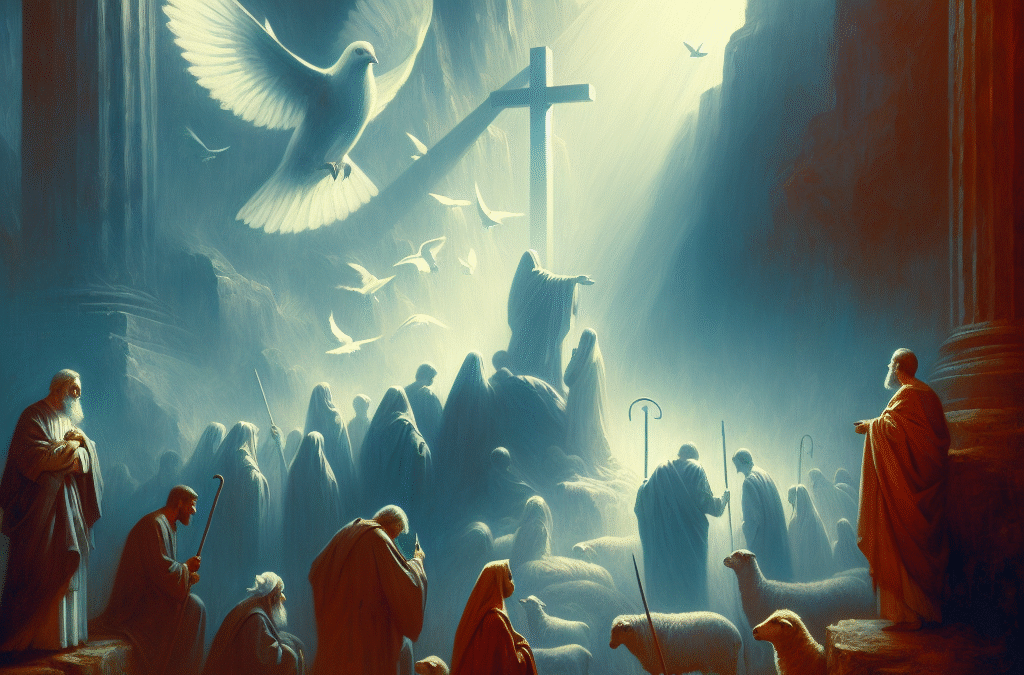
Jerusalem air, thick with the smoke of Passover lambs roasting on a thousand fires. The smell of rosemary, thyme, and burning fat. A low-ceilinged room, lit by flickering oil lamps that cast long, dancing shadows. The atmosphere is tense, electric. Thirteen men recline around a low table. Their feet are dusty from the city streets. Their hearts are heavy with unspoken dread. Jesus, the Rabbi, wears the look of a man carrying the weight of mountains. He has just washed their feet—a slave’s task. He has spoken of love and service. But now, a darker cloud descends.
He quotes Psalm 41:9, his voice grave: “He who shared my bread has turned against me.” The disciples look at one another, bewildered, hurt. Who? Peter, ever impulsive, signals to John, reclining closest to Jesus. “Ask him who he means.” John leans back, his head near Jesus’ chest, and whispers, “Lord, who is it?”
Jesus does not shout. He does not point an accusing finger. His answer is a gesture of profound intimacy, a custom of honor and friendship. He takes a piece of bread, dips it into the common dish of haroset—a sweet paste of fruit and nuts symbolizing the mortar of Egyptian slavery—and hands it directly to Judas Iscariot. It is a sign of special favor. A token of close fellowship. In that moment, at the Table of Fellowship, the Friend offers friendship to his betrayer. And the betrayer takes the bread. He accepts the honor. Then he gets up and walks out into the night—a night now utterly dark, for he has rejected the Light.
This is not merely history. It is the eternal human drama compressed into one sacred, horrifying moment. It is the tension between divine invitation and human volition. Between grace offered and grace spurned. Between the open hand of God and the clenched fist of man. We live in this tension daily. We see the good, the beautiful, the true offered to us—in relationships, in conscience, in the quiet voice of God—and we so often choose the coin, the escape, the shadow.
Today, we study The Dipped Bread: Judas and Rejected Grace. We will discover how the most terrifying reality in the universe is not judgment, but grace deliberately and finally refused.
I. The Setting: A Table of Covenantal Intimacy
To understand the weight of the dipped bread, we must first feel the weight of the table. This was not a casual meal. It was the Passover Seder, the most theologically charged, identity-forming meal in the Jewish calendar. Every element spoke of covenant, redemption, and belonging.
1. The Passover Context: Redemption Remembered.
The Passover commemorated Israel’s deliverance from Egypt. The lamb, the bitter herbs, the unleavened bread—each item was a tactile sermon on God’s saving power. To share this meal was to participate anew in the story of redemption. It declared, “We are the people God saved.” For Jesus to reinterpret this meal around Himself (“This is my body… my blood”) was to claim to be the true Passover Lamb, the ultimate Redeemer. Judas was not just leaving a dinner party; he was walking out on the story of salvation itself.
2. The Reclining Posture: The Free Man’s Rest.
They reclined. The Greek term anakeimai signifies leaning on one side, the posture of free men, not slaves. At Passover, they reclined to symbolize their freedom from Egyptian bondage. Here they were, posturing as the free, while one among them was voluntarily enslaving himself to Satan (John 13:2, 27). The physical posture of liberty contrasted violently with the spiritual descent into bondage.
3. The Common Bowl: Symbol of Shared Life.
The dish into which Jesus dipped the bread (to trublion, John 13:26) was a central bowl. From it, everyone ate. In Middle Eastern culture, to share a common bowl was to signify trust, unity, and deep fellowship. It declared a breach of social boundaries. It said, “We are one.” Judas’s hand reached into the same bowl as Jesus’s. His betrayal, therefore, was not distant treachery but intimate violation. It corrupted the very symbol of unity.
Theological Contrast: Hedonism vs. Covenantal Love.
The secular worldview of Judas’s moment—and ours—is often a form of Hedonistic Transactionalism. Value is calculated in immediate pleasure, personal gain, or political advantage. Judas saw 30 pieces of silver. He calculated the risk of following a failing Messiah. The table, however, operated on a Covenantal Ontology. Value is derived from faithful relationship with God and His people. The meal was an act of remembrance and participation in a story bigger than oneself. Judas applied a transactional calculator to a covenantal feast. He is the patron saint of all who evaluate God’s offer of friendship through the lens of cost-benefit analysis.
II. The Gesture: The Dipped Bread (Psōmion)
Now we come to the centerpiece: the gesture itself. “Jesus answered, ‘It is the one to whom I will give this piece of bread when I have dipped it in the dish.’ Then, dipping the piece of bread, he gave it to Judas Iscariot, son of Simon” (John 13:26).
1. The Act of Dipping (Baptō): An Honor Misused.
The Greek verb baptō means to dip, to immerse. In the context of a formal meal, the host dipping a choice morsel and handing it to a guest was a recognized sign of special honor and affection. It singled out one guest for favor. It was a public declaration of friendship. Jesus, the Host of all creation, performs this act of honor for the one who has already covenanted with His enemies (Luke 22:3-6). This is grace in its most scandalous form. It is favor bestowed not in ignorance of the offense, but in full knowledge of it. Jesus is not fooled. He is gracious.
2. The Piece of Bread (Psōmion): More Than Food.
The word used is psōmion—a fragment, a morsel, a sop. It is not the artos (loaf) of the Eucharist institution (which happens later, in the Synoptic accounts). This is a specific, personal token. By handing this morsel to Judas, Jesus is making one final, personal, and unmistakable appeal. He is saying, in effect, “Judas, my friend, even now. Even after your bargain. The door is not shut. This token of my friendship is still yours. Take it, and remain.” It is the ultimate offer of reconciliation before the point of no return.
3. The Satanic Entrance: The Anatomy of Hardening.
“As soon as Judas took the bread, Satan entered into him” (John 13:27). The sequence is chillingly deliberate. The offer is made. The offer is physically accepted (Judas takes the bread). Then, and only then, does Satan fully enter. This is not possession against will; it is possession by invitation. The Greek eiselthen (entered) implies a taking up of residence. Judas had opened the door through calculated unbelief and greed. Jesus’s final offer of grace was the last test. Accepting the bread of friendship while holding betrayal in his heart was the final act of hypocrisy that flung the door wide open. God’s kindness, when repeatedly spurned, leads not to neutral ground, but to judicial hardening (Romans 1:24-28).
Worldview Analysis: Stoic Fate vs. Sovereign Grace.
A Stoic might see Judas as a tragic figure on a predetermined path, a pawn of fate. The biblical narrative rejects this. Judas made conscious, willful choices (John 12:4-6). An Existentialist might applaud his “authentic” if destructive, act of self-definition. The text condemns it as the ultimate inauthenticity—becoming a vessel for another, evil will. The biblical view presents Sovereign Grace and Human Responsibility in terrifying tension. Jesus knew Judas would betray Him (John 6:64, 13:11). Yet Jesus treated him with dignity, included him in the inner circle, and offered him genuine friendship and honor—right to the end. Judas’s destiny was sealed not by divine fiat alone, but by his own repeated, cherished sin in the very presence of grace.
III. The Contrast: Offered Friendship vs. Chosen Betrayal
The power of this scene lies in the violent juxtaposition of two realities: what Jesus offered and what Judas chose.
1. What Jesus Offered: Philia in the Face of Echthra.
The offered morsel was a symbol of philia—friendship love, companionate love. This is the love between David and Jonathan. It is covenantal, loyal, intimate. Jesus calls the disciples His “friends” (philoi) in John 15:13-15. He offers this to Judas, knowing Judas is harboring echthra—enmity, hostility (Romans 8:7). This is divine love operating in its most counter-intuitive mode. It does not wait for the enemy to become a friend. It treats the enemy as a friend, hoping to make him one. Man’s wisdom says, “Guard yourself. Retaliate.” God’s “foolishness” says, “Offer the bread. Wash the feet. Love to the end.”
2. What Judas Chose: The Synthēkē of Shadows.
While Jesus offered covenant (diathēkē), Judas had already made a bargain. The word for “agreement” in Luke 22:5 is syntithēmi—to put together, to covenant. He made a synthēkē, a mutual contract, with the chief priests. He chose a transaction over a relationship. A finite sum over infinite worth. The approval of the religious establishment over the friendship of God Incarnate. His choice reveals the core of all sin: the preference for a created thing over the Creator. The silver was a thing. Jesus was the Person. Judas chose the thing.
3. The Unmasking and the Darkness: “What you are about to do, do quickly.”
Jesus’s command to Judas (John 13:27) is not a go-ahead but a release. It is the sorrowful dismissal of one who has made his choice. It is like God saying to the rebellious, “Have it your way” (cf. Hosea 4:17). The text notes ominously, “And it was night” (John 13:30). This is not just chronological. It is theological. Judas leaves the light of the Upper Room (where Jesus, the Light of the World, is) and enters the night. He moves from fellowship to alienation, from truth to deception, from the realm of grace to the realm of consequence. He becomes a man defined by his absence from the Table.
Theology of Overflow: Subverting the Culture of Betrayal.
In a culture where betrayal was met with immediate vengeance and honor required retaliation, Jesus submitted this cultural script to the Gospel. He created a new protocol. The Theology of Overflow here is that divine love, when poured out, does not retract in the face of evil. It offers a higher honor. It serves the betrayer. It washes the traitor’s feet. It gives him the choice morsel. This love overflows the banks of human reciprocity. It seeks not to balance accounts but to drown evil in a flood of unmerited kindness. Jesus, in this moment, does not merely participate in the Passover; He enacts the deeper drama of a God who loves His enemies. He submits the entire social logic of “an eye for an eye” to the revolutionary logic of the cross.
IV. Application: Living in the Light of the Dipped Bread
This is not a safe, academic story. It is a mirror. It asks us: At which table do I sit? What do I do with the bread Jesus offers me?
Legacy Point 1: Examine Your Reception of Grace.
Judas sat at the table. He ate the bread. He heard the words. He performed the rituals. Outwardly, he was a disciple. Inwardly, he cherished a secret sin—greed, disillusionment, a rival agenda. The dipped bread was the test that revealed his heart. We must ask: Is my faith a reception of grace, or a use of religion? Do I come to Jesus for Him, or for what He can give me—comfort, community, a moral framework, success? The most dangerous person in the world is the one who handles the holy things while cherishing an unholy heart. Practice regular, prayerful self-examination. Invite the Holy Spirit to search you for any “contract with the chief priests”—any cherished sin, any preferred thing you value over Christ Himself.
Legacy Point 2: Never Presume Upon the Offer.
Judas presumed. He presumed he could have the fellowship and the silver. He presumed there would always be another moment, another chance. The dipped bread was the final, specific, personal offer. Grace is infinite, but opportunity is not. God’s patience has a terminus. The writer to Hebrews warns of being hardened by sin’s deceitfulness (Hebrews 3:13). Do not mistake God’s present patience for His eternal approval. The continued offer of the Gospel, the stirring of conscience, the nagging sense of call—these are the dipped bread moments in your life. Respond today. Do not harden your heart.
Legacy Point 3: Emulate the Heart of the Host.
How do we treat those who hurt us? Those who betray trust? Our instinct is to exclude, to shame, to retaliate. Jesus offers a new protocol. Before exposing Judas’s sin to all, He served him. He honored him. He gave him a final chance. Our call is not to be naïve, but to be Christ-like. This means offering gestures of reconciliation even when we know they may be rejected. It means praying for the one who hurts us. It means leaving the door of repentance open, as God does for us. We love not because it will “work,” but because He first loved us.
Legacy Point 4: Fix Your Eyes on the True Recipient.
The story of Judas is a warning, but it is not the center. The center is Jesus. He is the Host who serves. The Friend who loves. The Lamb who is betrayed. Our faith must not be anchored in the fear of becoming Judas, but in the worship of the Christ who died for Judases. Look at His hands, offering the bread. See His eyes, full of sorrow and resolve. He knew. And He dipped the bread anyway. Your security is not in the strength of your grip on Him, but in the strength of His grip on you (John 10:28-29). Let the failed disciple drive you to the faithful Savior.
Epic Conclusion: The Lamb Who Was Slain
In the end, this scene points beyond itself to a hill and a cross. The bread dipped in the haroset, the sweet mortar, foreshadows a body broken. The friend betrayed for silver points to the God-man sold for the price of a slave. The night Judas entered was the darkness that would cover the land at noon as the true Passover Lamb was sacrificed.
Judas is the tragedy of the human will, asserting itself against divine love. Jesus is the triumph of divine love, submitting the human will to the will of the Father. At this table, we see both paths in stark relief: the path of taking, which leads to night, and the path of receiving, which leads to life.
But the story does not end with Judas’s suicide. It ends with an empty tomb and a risen Christ who still bears the marks of the betrayal. The same Jesus who offered the dipped bread to His betrayer now offers the bread of life—His own body—to all who will receive it. The Table of Betrayal becomes, for all who believe, the Table of Mercy. The morsel of testing becomes the feast of salvation.
Come to this table. But come in faith. Come in repentance. Come, not as one who uses the Master, but as one who loves the Friend. Take the bread He offers. It is the bread of life. To reject it is to choose the night. To receive it is to walk forever in the light of the One who is both Host and Meal.
“While they were eating, Jesus took bread, and when he had given thanks, he broke it and gave it to his disciples, saying, ‘Take and eat; this is my body.’” (Matthew 26:26)
Postagens/Posts/Publicaciones
- “Is It God or Is It Just My Head?” The Ultimate Guide to Stop Guessing and Start Discerning
- “Show Me Your Glory”: The Mystery of the Cleft of the Rock and the Safe Place in Jesus
- A Kenosis: The Emptying of Glory (Philippians 2)
- Anxiety and Faith: Is it a sin to take medication or go to therapy? What the Bible really says
- Celestial Breaking News: “New Year” Doesn’t Exist in the Bible? A Deep Investigation into the Theology of New Beginnings
- Celestial Breaking News: The Day Heaven Invaded Earth (The True Story of Christmas You Never Heard)
- Christmas Investigation: Does the Bible Reveal the Exact Day Jesus Was Born? (The Mystery of Tabernacles)
- Church or Cult? The Ultimate Biblical Guide for the New Convert to Find a Safe Spiritual Home
- Corinth: Sacred Monday (Tentmaker’s Work)
- Ephesus: The Theater of Shadows (Spiritual War and Culture)
- Ephesus: The Theater of Shadows (Spiritual Warfare and Culture)
- First Steps with Jesus: A Biblical Guide to Start Your Journey of Faith
- From Failure to Rock: The Denial and Restoration of Peter.
- From the Pit to the Palace: When God’s Presence Feels Like Absolute Silence
- Fruit vs. Gifts: The Priority of Character
- God’s Radar: Integrity and the Gaze of God (2 Chr 16:9)
- Grace in Lo-debar: The King’s Call (Mephibosheth / 2 Samuel 9)
- I Converted, But I Sinned Again: The Liberating Truth About Your Internal Struggle
- I Find Reading the Bible and Praying Boring: How to Overcome Spiritual Boredom and Build Consistency
- Jerusalem/Rome: The Compass (The End of the Race)
- Justification: The Courtroom of Grace
- Melchizedek: The King Without Genealogy
- Nicodemus: The Theologian in Darkness (The New Birth)
- Real Life #1: “How to Share Jesus with My Family Without Starting World War III” — The Ultimate Guide to Home Evangelism
- Real Life #2: “Do I Really Need to Get Baptized? What Really Happens in the Water” — The Ultimate Guide to the Public Wedding with Christ
- Real Life #3: “Did God Call Me? How to Discover My Purpose Without Becoming a Pastor” — Ending the Sacred-Secular Divide
- Real Life #4: “Christian Dating vs. Hookup Culture: The Survival Manual for Singles” — Purity, Purpose, and the Physics of Being Unequally Yoked
- Real Life #5: “Tithes and Offerings: Is God Broke or Am I Greedy?” — Money as a Spiritual Thermometer
- Silence in Chaos: Why Having Faith Doesn’t Make You Immune to Anxiety (And How to Find Real Peace)
- Silence is Not Absence: A Deep Guide to Resetting Your Frequency and Finding the Overflow of Purpose
- Spiritual Detox #1: “I Accepted Jesus, Now My Problems Will End” — The Big Lie and the True Promise
- Spiritual Detox #2: “Do I Have to Cut Off Non-Christian Friends?” — The Definitive Guide to the “Holy Bubble”
- Spiritual Detox #3: “Christians Don’t Get Depressed?” — Breaking the Mental Health Taboo in the Church
- Spiritual Detox #4: “Can the Devil Read My Thoughts?” — The End of Paranoia and True Spiritual Authority
- Spiritual Detox #5: “I Don’t Feel God, So He’s Not Listening” — The Danger of Goosebump-Based Faith
- Spiritual Detox #6: “If I Sin, Does God Walk Away and Stop Loving Me?” — The Survival Guide for the “Spiritual Hangover”
- Spiritual Detox #7: “Do I Have to Become a Boring Christian?” — The End of the ‘Do’s and Don’ts’ List and True Holiness
- Start Here: 7 Days to Hear God (Reading John)
- The Abyss of Glory: The Depth of the Riches (Romans 11:33).
- The Anatomy of a Heart: Why Did God Love Such an Imperfect Man So Much?
- The Art of Abiding: Prayer, Discipleship, and the Secret of Consistency
- The Art of Provocation: Communion and Mutual Encouragement in Hebrews 10:24
- The Art of Provocation: Communion and Mutual Encouragement in Hebrews 10:24
- The Crimson Mystery: The Theology, Legality, and Power of “Pleading the Blood”
- The Dungeon: The Winter of the Soul (Solitude/2 Timothy)
- The Emmaus Bread: Eyes Opened in Communion (Luke 24).
- The Eternity Code: Forensic Evidence That the Bible Is the Word of God
- The Final Metanoia: What It Really Means to Have the Mind of Christ
- The Great Discovery of December 31st: The End of Waiting (The Kingdom is Now)
- The Great Plan: The Architecture of Rescue (When the Fall Meets Grace)
- The Great Plan: Understanding the “Exchange” That Changes Everything
- The Importunate Friend: A Theology of Persistence
- The Incomparable #1: “The Terrorist of Tarsus: How God Turns His Worst Enemy Into His Greatest General”
- The Incomparable #10: The Last Breath — The Death of the Servant vs. The Death of the Atheist (Final Special)
- The Incomparable #2: “The Arabian Desert: Why Does God ‘Hide’ Those He Plans to Use?” — The Secret Power of Anonymity
- The Incomparable #3: The Fight with Barnabas and the Cost of Leadership
- The Incomparable #4: When Heaven Says “No” (The Frequency of the Spirit)
- The Incomparable #5: The Overflow — When the Gospel Faces Culture (Paul in Athens)
- The Incomparable #6: Silence in Chaos — The Theology of the Shipwreck (Paul in Acts 27)
- The Incomparable #7: The Art of Letting Go — The Radical Theology of Forgiveness (Paul and Philemon)
- The Invitation of the Maimed: The Parable of the Great Banquet
- The Invitation of the Maimed: The Parable of the Great Banquet
- The Iron Mask: Why We Feel Like a Fraud and How to Cure Spiritual Imposter Syndrome
- The Judgment of the Nations: The Sheep and the Goats
- The Kairos of God: Sovereignty Over Time in Eternity
- The Logic of Blood: Why was Jesus’ death the only solution?
- The Mirror: The Death of the Slave, The Birth of the Son
- The Orphan Syndrome: Why Do You Keep Acting Like a Slave When You Already Have the House Keys?
- The Place of the Sinner: The Alabaster Jar (Luke 7).
- The Prince, The Shepherd, and The Deliverer: When the Desert Is the Only School
- The Prison of Resentment: How to forgive someone who never said “I’m sorry”
- The Rich Young Ruler: The Tragedy of Almost-Salvation
- The Samaritan Woman: The Forgotten Jar at the Well
- The School of Prayer: How to Learn to Speak the Language of Heaven
- The Seal of the Spirit: Pledge and Property
- The Secret of the Secret Place: The Intimacy that Pleases God (Martha and Mary)
- The Shrewd Manager: Investing in Eternity
- The Sound of Silence: What God Was Doing When He Stopped Speaking
- The Tabernacle: The Engineering of Presence
- The Table in the Wilderness: The Valley of the Shadow (Psalm 23).
- The Table of Betrayal: The Dipped Bread (Judas and Rejected Grace)
- The Table of Betrayal: The Dipped Bread (Judas and Rejected Grace)
- The Ten Virgins: The Danger of Borrowed Oil
- The Terror of God (The Invisible War)
- The Upside-Down Kingdom: Why Jesus’ Logic Offends Our Human Logic
- The Widow of Nain: When Two Processions Meet
- Tongues of Fire or Strange Fire? The Gift of Tongues, Paul, and the Ghost of Montanism
- When Heaven is Silent: A Survival Guide for the “Dark Night of the Soul”
- Zacchaeus: The Tree of Curiosity