


Series: The Upside-Down Kingdom
Biblical Text: Luke 14:15-24 (NIV)
Estimated Reading Time: 15 minutes
Cinematic Introduction
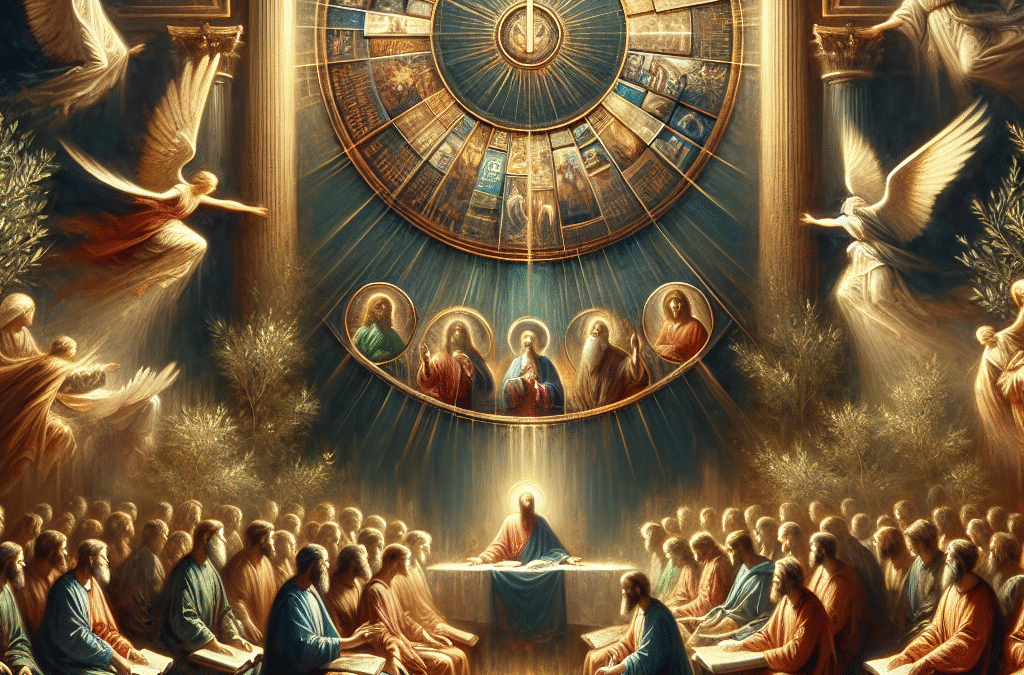
Imagine the scene. The air is thick with the scent of roasted lamb and baking bread. The room hums with the low murmur of privileged conversation. You are reclining at the table of a prominent Pharisee on the Sabbath. The architecture speaks of stability—stone walls, carefully laid tiles, a place of religious and social order. Outside, the dusty streets of a Judean town bake under the Mediterranean sun. But inside, a different heat is building. A man with a withered hand has just been healed. Controversy crackles in the air. The host and his guests watch Jesus with wary, calculating eyes. They are testing Him. He is exposing them.
This is no casual meal. It is a theological battlefield. Seating arrangements reveal hearts hungry for honor. Invitation lists declare who is in and who is out. Every custom is a loaded statement. Into this atmosphere of performative piety and social climbing, a voice rings out: “Blessed is the one who will eat at the feast in the kingdom of God!” (Luke 14:15). It is a pious platitude, a safe religious sentiment from a guest. It expects a nod of agreement. Instead, it receives a story that shatters the world.
Today, we study The Parable of the Great Banquet. We will discover how God’s gracious invitation, refused by the self-sufficient, is extended with shocking urgency to the very people our systems exclude—and how this redefines our community, our mission, and our very understanding of grace.
I. The Context of the Refusal: A World of Ordered Exclusion
Jesus’ parable does not occur in a vacuum. It is the explosive climax of a series of Sabbath confrontations and meal-time teachings in Luke 14. To feel its force, we must understand the world it critiques.
1. The Sociology of Honor and Shame. The ancient Mediterranean world operated on a strict honor-shame code. Honor was a finite social commodity. To gain honor, you had to take it from someone else. Meals were primary theaters for this contest. Seating order (klisis) near the host signaled your prestige. Invitations were carefully calculated social transactions, given to those who could reciprocate, ensuring the cycle of honor and obligation (Luke 14:12). The banquet was a mirror of the social cosmos: ordered, hierarchical, and exclusive. The poor, the crippled, the lame, and the blind (ptōchos, anapeiros, chōlos, tuphlos) were not just absent; their exclusion was a necessary feature of maintaining the system’s purity and prestige (Leviticus 21:17-23 was often misapplied to social, not just priestly, exclusion).
2. The Theology of Merit and Blessing. The guest’s exclamation in verse 15 reveals a deep-seated worldview: the kingdom feast is for the blessed, and blessing is evidenced by prosperity, health, and social standing. This is a theology of correspondence—outer circumstance reflects inner spiritual reality. It is the error Job’s friends made. In this view, the man with dropsy (Luke 14:2) wasn’t just ill; he was under a shadow. The poor weren’t just unfortunate; they were unblessed. To invite them to your table wasn’t charity; it was spiritual and social contamination. The kingdom, therefore, would naturally be populated by people like the present company: religious, respectable, and reciprocating.
3. The Jesus Intervention. Jesus systematically dismantles this world. He heals on the Sabbath, prioritizing human liberation over ritual prohibition (14:3-4). He critiques guest selection, advocating for humble self-seating (14:7-11). He radically redefines host selection, commanding invitations to “the poor, the crippled, the lame, the blind” precisely because they cannot repay (14:12-14). He declares that such acts find reward “at the resurrection of the righteous”—a eschatological reversal, not a temporal payback. The stage is now set. The prevailing system of meritocratic, exclusive, reciprocal honor has been declared null and void by the in-breaking Kingdom. The parable is the judicial verdict on that old system.
II. Exegesis of the Disruption: The Parable of the Great Banquet (Luke 14:15-24)
1. The Lavish Invitation (v. 16-17).
“A certain man was preparing a great banquet and invited many guests.” The Greek for “great” is megas, implying a feast of exceptional cost and scale, a once-in-a-lifetime event. The verb “invited” is kaleō, meaning to call or summon by name. This is a personal, prior invitation (the proklesis), common in ancient custom. It established a social contract. The servant’s announcement, “Come, for everything is now ready,” uses the perfect tense: hestēra estin—”it now stands ready.” The preparation is complete and its results are permanently available. The Kingdom is not a future theory; it is a present, prepared reality. The urgency is immediate: “Come now.”
2. The Unified Refusal (v. 18-20).
The refusal is not polite regret; it is a series of calculated insults. All three excuses are transparently false and profoundly offensive.
- The Field (v. 18): “I have just bought a field, and I must go and see it.” No one in the ancient world bought land without first inspecting it meticulously. The excuse is absurd. His property (agros) takes priority over the host’s person.
- The Oxen (v. 19): “I have just bought five yoke of oxen and I’m on my way to try them out.” The same absurdity. Testing follows purchase. His business (pragma) takes priority.
- The Marriage (v. 20): “I just got married, so I can’t come.” Deuteronomy 24:5 exempted a newlywed from war, but not from social duties. His personal pleasure (hēdonē) takes priority.
This is a trifecta of idolatry: Possessions, Productivity, and Passion. The excuses reveal hearts that are not merely busy, but satisfied. The world they have built—their property, their work, their private joys—is sufficient. They feel no need for the banquet. Their refusal is a declaration of independence from the host. They believe their own estates are superior to his banquet hall.
3. The Master’s Righteous Anger (v. 21).
“The owner of the house became angry.” The Greek orgistheis denotes a righteous, settled wrath. The insult is not merely personal; it is a rejection of his generosity, a spurning of his costly preparation. His response is decisive and revolutionary. He turns permanently from the original guests. “Go out quickly into the streets and alleys of the town and bring in the poor, the crippled, the blind and the lame.” These are the very classes named in verse 13. The host now commands what Jesus had earlier advised. The Greek is urgent: exelthe tachy (“go out quickly!”). The mission is to the “streets and lanes” (plateias kai rhymas)—the broad public squares and the narrow back alleys, covering all public space.
4. The Persistent, Expansive Grace (v. 22-23).
Even after gathering society’s outcasts, “there is still room.” The Kingdom’s capacity exceeds the first wave of unexpected guests. The master’s second command escalates the scope: “Go out to the highways and hedges and compel people to come in.” This moves the mission beyond the town walls, into the major roads (hodous) and the field boundaries (phragmous). This likely refers to Gentiles, travelers, and those with no fixed address—the utterly marginalized and ritually suspect. The verb “compel” (anankason) does not imply violent coercion, but rather persuasive urgency, overcoming the natural reluctance and shame of such people who would think, “A banquet for me? Surely not.” The host’s desire is unequivocal: “that my house may be filled.” The Greek gemisthē means “to be filled to capacity.” His honor will not be found in the quality of the guests by worldly standards, but in the fullness of his house on his own terms—terms of sheer, unmerited grace.
5. The Final Exclusion (v. 24).
The parable ends with a solemn, judicial pronouncement: “For I tell you, not one of those who were invited will get a taste of my banquet.” The original invitees, who had the first claim, are now utterly excluded. Their places have been taken. The verb “invited” here is keklēmenoi, perfect participle: “those who have been called.” Their calling stands, but their refusal is final. The banquet will proceed without them. The table is full, but they are not in it.
III. The Theology of the Maimed Invitation
This parable is a seismic revelation of the Kingdom’s nature. It confronts us with three foundational truths.
1. The Crisis of Complacency. The original guests represent religious Israel, particularly its leadership, but also the universal human condition. Their sin was not gross immorality, but respectable worldliness. They preferred their own good things to God’s best thing. This is the essence of unbelief: the soul finding its satisfaction in the created thing rather than the Creator (Romans 1:25). The parable declares that the greatest barrier to the Kingdom is not active rebellion, but passive preoccupation. It is the soul that says, “I have need of nothing,” unaware it is “wretched, pitiful, poor, blind and naked” (Revelation 3:17).
2. The Priority of Grace. The host’s action is grace in its most disruptive form. He invites those who cannot repay, those who will not improve his social standing, those who might even embarrass his gathering. The Greek terms are stark: ptōchos (the destitute beggar), anapeiros (the crippled), tuphlos (the blind), chōlos (the lame). In the worldview of the day, these conditions were often seen as evidence of divine disfavor. Yet, the host’s honor is now paradoxically tied to their presence. This is the Gospel: God’s glory is magnified not in the selection of the worthy, but in the transformation of the unworthy. He chooses the foolish, weak, lowly, and despised things of the world to nullify the things that are, so that no one may boast before Him (1 Corinthians 1:27-29).
3. The Urgency of the Kingdom. The repeated “go out quickly” signals a moment of crisis. The banquet is ready. The decision is now. This is the “kairos”—the decisive, God-appointed time. The master’s insistence on filling the house reveals a divine determination. God will have a people. His redemptive purpose will be accomplished. If the natural heirs refuse, He will raise up heirs from the stones (Matthew 3:9). This urgency is not born of divine desperation, but of divine sovereignty working through human agency. The space must be filled because the Lamb was slain to redeem a people from every tribe and language (Revelation 5:9). The empty seat is an affront to the sufficiency of the cross.
IV. Worldview Collision: The Banquet vs. The Alternatives
The parable stands in radical opposition to every human system of value and community.
- Against Hedonism: The third excuse (marriage) represents life lived for private pleasure. The Kingdom says true joy is found only in the shared feast of God’s presence, not in isolated self-gratification.
- Against Stoicism/Asceticism: The Kingdom is not a call to dispassionate self-denial or retreat. It is an invitation to a joyous, communal celebration. It engages the world, not to escape it, but to bring its rejects to the table.
- Against Moralistic Therapeutic Deism: The god of this modern creed is a distant host who invites the generally nice and respectable. The God of the parable is passionately involved, His honor at stake, who fills His house with the broken and sends His servants out urgently to compel the unwilling.
- Against Consumer Spirituality: The original guests treated the invitation as one consumer option among many. The parable declares the Kingdom is the only option, demanding total reorientation. You cannot add the banquet to your life; your life must be re-centered on the banquet.
The Theology of Overflow is seen in the master’s relentless pursuit of guests. His grace is not a limited commodity, carefully rationed to the deserving. It is an overflowing fountain, extending further and further into the highways and hedges until every seat is taken. The culture of reciprocal honor is submitted to the gospel of non-reciprocal grace, creating a new community where the only thing shared is their shared need and their shared benefactor.
V. Application: Living at the Maimed Man’s Table
How does this disruptive grace translate to Monday morning? It reshapes our identity, our community, and our mission.
Legacy Point 1: Cultivate Holy Dissatisfaction.
Examine your excuses. What field, oxen, or marriage are you using to defer full surrender to Christ’s invitation? Is your life characterized by a self-satisfied busyness? Pray for the grace to see your good things as gifts, not rivals. Let the Spirit expose the idolatry of the respectable. Blessed are the poor in spirit, for theirs is the kingdom. Embrace your spiritual poverty as the only valid ticket to the feast.
Legacy Point 2: Re-imagine the Church as the Banquet Hall.
Our gatherings must reflect the guest list of verses 21-23. Are we a community where the broken, the struggling, the socially awkward, the economically poor, and the spiritually confused feel not just tolerated, but celebrated as evidence of God’s grace? This goes beyond programs. It requires a culture where weakness is safe to share, where masks are unnecessary, and where the stories of grace to “the least of these” are the community’s crown jewels. The church is not a museum for saints; it is a hospital for sinners, transformed into a banquet hall for the redeemed.
Legacy Point 3: Embrace the Urgent, Compelling Mission.
The master said “Go out quickly” and “compel them.” We are the servants. Our mission is not to guard the door of a private club, but to scour the streets, alleys, highways, and hedges. Who are the “maimed” in your sphere? The emotionally crippled? The spiritually blind? The relationally lame? The intellectually poor? Go to them. Persuade them. Overcome their objections—not with argument, but with the compelling beauty of a grace you yourself have received. The message is not “improve yourself and you might be welcome.” It is “Come as you are, for everything is ready.”
Legacy Point 4: Feast in the Presence of Your Enemies.
The original guests, now excluded, represent a world that rejects the host. Psalm 23:5 says, “You prepare a table before me in the presence of my enemies.” We feast while a refusing world looks on. Our joy, our community, our peace is our primary witness. Do not downplay the feast to appease those who refused the invitation. Let the fullness and joy of the banquet hall be evident. It is a foretaste of the wedding supper of the Lamb (Revelation 19:9).
Epic Conclusion
This parable finds its ultimate meaning in the person of Jesus Christ. He is the host who prepared the banquet at the cost of His own life. He is the servant who goes into the streets and hedges, His hands and feet pierced for our transgressions. He is the one who was Himself “maimed” on the cross—despised and rejected, a man of suffering, and familiar with pain—so that the maimed, the blind, the lame, and the poor could be made whole and welcomed home.
The table He spreads is His own body broken. The cup He offers is His own blood poured out. The great banquet is the eternal celebration of a reconciliation so costly, so profound, that it could only be filled by those who know the depth from which they have been lifted. The respectable and self-sufficient will never taste it. But the beggar, the cripple, the blind, and the lame—all who come in the desperate, empty-handed faith that says, “I need that feast more than I need breath”—will be filled.
He is still sending out the invitation. The decisive moment is now. The excuses are still being made. And the streets are still full of those who think the feast could never be for them. Will we, the once-maimed now seated at the table, stay contentedly inside? Or will we, our mouths still full of the bread of life, rise and run with urgent joy to the highways and hedges, compelling the broken world with the only words that finally matter: “Come. Everything is ready.”
“The Spirit and the bride say, ‘Come!’ And let the one who hears say, ‘Come!’ Let the one who is thirsty come; and let the one who wishes take the free gift of the water of life.” (Revelation 22:17)
Postagens/Posts/Publicaciones
- “Is It God or Is It Just My Head?” The Ultimate Guide to Stop Guessing and Start Discerning
- “Show Me Your Glory”: The Mystery of the Cleft of the Rock and the Safe Place in Jesus
- A Kenosis: The Emptying of Glory (Philippians 2)
- Anxiety and Faith: Is it a sin to take medication or go to therapy? What the Bible really says
- Celestial Breaking News: “New Year” Doesn’t Exist in the Bible? A Deep Investigation into the Theology of New Beginnings
- Celestial Breaking News: The Day Heaven Invaded Earth (The True Story of Christmas You Never Heard)
- Christmas Investigation: Does the Bible Reveal the Exact Day Jesus Was Born? (The Mystery of Tabernacles)
- Church or Cult? The Ultimate Biblical Guide for the New Convert to Find a Safe Spiritual Home
- Corinth: Sacred Monday (Tentmaker’s Work)
- Ephesus: The Theater of Shadows (Spiritual War and Culture)
- Ephesus: The Theater of Shadows (Spiritual Warfare and Culture)
- First Steps with Jesus: A Biblical Guide to Start Your Journey of Faith
- From Failure to Rock: The Denial and Restoration of Peter.
- From the Pit to the Palace: When God’s Presence Feels Like Absolute Silence
- Fruit vs. Gifts: The Priority of Character
- God’s Radar: Integrity and the Gaze of God (2 Chr 16:9)
- Grace in Lo-debar: The King’s Call (Mephibosheth / 2 Samuel 9)
- I Converted, But I Sinned Again: The Liberating Truth About Your Internal Struggle
- I Find Reading the Bible and Praying Boring: How to Overcome Spiritual Boredom and Build Consistency
- Jerusalem/Rome: The Compass (The End of the Race)
- Justification: The Courtroom of Grace
- Melchizedek: The King Without Genealogy
- Nicodemus: The Theologian in Darkness (The New Birth)
- Real Life #1: “How to Share Jesus with My Family Without Starting World War III” — The Ultimate Guide to Home Evangelism
- Real Life #2: “Do I Really Need to Get Baptized? What Really Happens in the Water” — The Ultimate Guide to the Public Wedding with Christ
- Real Life #3: “Did God Call Me? How to Discover My Purpose Without Becoming a Pastor” — Ending the Sacred-Secular Divide
- Real Life #4: “Christian Dating vs. Hookup Culture: The Survival Manual for Singles” — Purity, Purpose, and the Physics of Being Unequally Yoked
- Real Life #5: “Tithes and Offerings: Is God Broke or Am I Greedy?” — Money as a Spiritual Thermometer
- Silence in Chaos: Why Having Faith Doesn’t Make You Immune to Anxiety (And How to Find Real Peace)
- Silence is Not Absence: A Deep Guide to Resetting Your Frequency and Finding the Overflow of Purpose
- Spiritual Detox #1: “I Accepted Jesus, Now My Problems Will End” — The Big Lie and the True Promise
- Spiritual Detox #2: “Do I Have to Cut Off Non-Christian Friends?” — The Definitive Guide to the “Holy Bubble”
- Spiritual Detox #3: “Christians Don’t Get Depressed?” — Breaking the Mental Health Taboo in the Church
- Spiritual Detox #4: “Can the Devil Read My Thoughts?” — The End of Paranoia and True Spiritual Authority
- Spiritual Detox #5: “I Don’t Feel God, So He’s Not Listening” — The Danger of Goosebump-Based Faith
- Spiritual Detox #6: “If I Sin, Does God Walk Away and Stop Loving Me?” — The Survival Guide for the “Spiritual Hangover”
- Spiritual Detox #7: “Do I Have to Become a Boring Christian?” — The End of the ‘Do’s and Don’ts’ List and True Holiness
- Start Here: 7 Days to Hear God (Reading John)
- The Abyss of Glory: The Depth of the Riches (Romans 11:33).
- The Anatomy of a Heart: Why Did God Love Such an Imperfect Man So Much?
- The Art of Abiding: Prayer, Discipleship, and the Secret of Consistency
- The Art of Provocation: Communion and Mutual Encouragement in Hebrews 10:24
- The Art of Provocation: Communion and Mutual Encouragement in Hebrews 10:24
- The Crimson Mystery: The Theology, Legality, and Power of “Pleading the Blood”
- The Dungeon: The Winter of the Soul (Solitude/2 Timothy)
- The Emmaus Bread: Eyes Opened in Communion (Luke 24).
- The Eternity Code: Forensic Evidence That the Bible Is the Word of God
- The Final Metanoia: What It Really Means to Have the Mind of Christ
- The Great Discovery of December 31st: The End of Waiting (The Kingdom is Now)
- The Great Plan: The Architecture of Rescue (When the Fall Meets Grace)
- The Great Plan: Understanding the “Exchange” That Changes Everything
- The Importunate Friend: A Theology of Persistence
- The Incomparable #1: “The Terrorist of Tarsus: How God Turns His Worst Enemy Into His Greatest General”
- The Incomparable #10: The Last Breath — The Death of the Servant vs. The Death of the Atheist (Final Special)
- The Incomparable #2: “The Arabian Desert: Why Does God ‘Hide’ Those He Plans to Use?” — The Secret Power of Anonymity
- The Incomparable #3: The Fight with Barnabas and the Cost of Leadership
- The Incomparable #4: When Heaven Says “No” (The Frequency of the Spirit)
- The Incomparable #5: The Overflow — When the Gospel Faces Culture (Paul in Athens)
- The Incomparable #6: Silence in Chaos — The Theology of the Shipwreck (Paul in Acts 27)
- The Incomparable #7: The Art of Letting Go — The Radical Theology of Forgiveness (Paul and Philemon)
- The Invitation of the Maimed: The Parable of the Great Banquet
- The Invitation of the Maimed: The Parable of the Great Banquet
- The Iron Mask: Why We Feel Like a Fraud and How to Cure Spiritual Imposter Syndrome
- The Judgment of the Nations: The Sheep and the Goats
- The Kairos of God: Sovereignty Over Time in Eternity
- The Logic of Blood: Why was Jesus’ death the only solution?
- The Mirror: The Death of the Slave, The Birth of the Son
- The Orphan Syndrome: Why Do You Keep Acting Like a Slave When You Already Have the House Keys?
- The Place of the Sinner: The Alabaster Jar (Luke 7).
- The Prince, The Shepherd, and The Deliverer: When the Desert Is the Only School
- The Prison of Resentment: How to forgive someone who never said “I’m sorry”
- The Rich Young Ruler: The Tragedy of Almost-Salvation
- The Samaritan Woman: The Forgotten Jar at the Well
- The School of Prayer: How to Learn to Speak the Language of Heaven
- The Seal of the Spirit: Pledge and Property
- The Secret of the Secret Place: The Intimacy that Pleases God (Martha and Mary)
- The Shrewd Manager: Investing in Eternity
- The Sound of Silence: What God Was Doing When He Stopped Speaking
- The Tabernacle: The Engineering of Presence
- The Table in the Wilderness: The Valley of the Shadow (Psalm 23).
- The Table of Betrayal: The Dipped Bread (Judas and Rejected Grace)
- The Table of Betrayal: The Dipped Bread (Judas and Rejected Grace)
- The Ten Virgins: The Danger of Borrowed Oil
- The Terror of God (The Invisible War)
- The Upside-Down Kingdom: Why Jesus’ Logic Offends Our Human Logic
- The Widow of Nain: When Two Processions Meet
- Tongues of Fire or Strange Fire? The Gift of Tongues, Paul, and the Ghost of Montanism
- When Heaven is Silent: A Survival Guide for the “Dark Night of the Soul”
- Zacchaeus: The Tree of Curiosity