


Series: Encounters with Jesus
Biblical Text: John 3:1-21 (NIV)
Estimated Reading Time: 15 minutes
Cinematic Introduction: The Theologian in the Shadows
Imagine the scene.
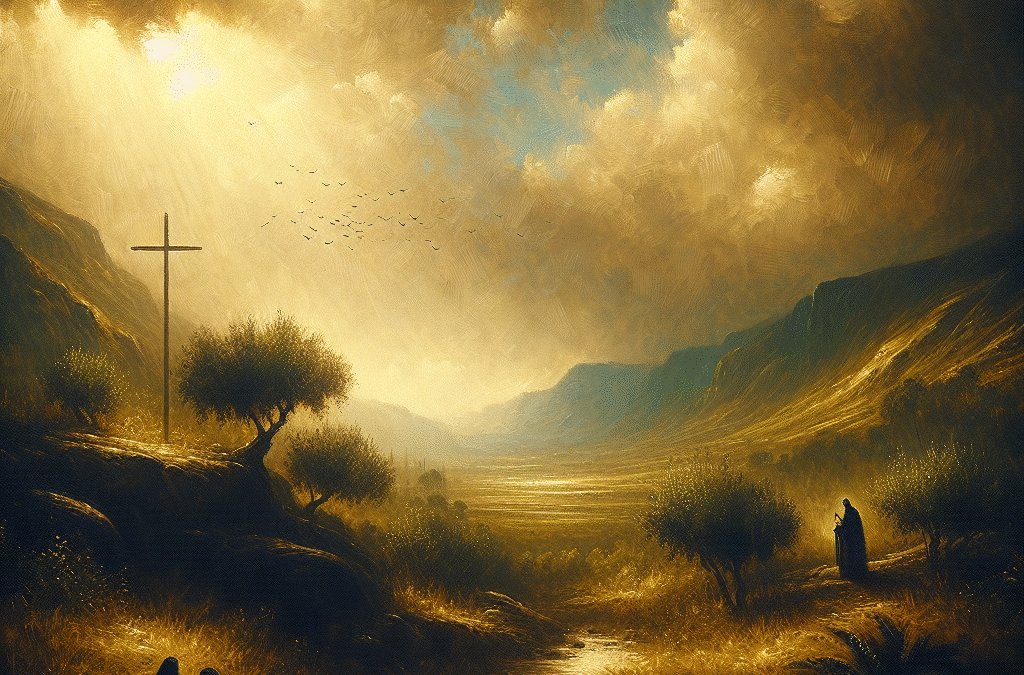
Jerusalem sleeps. The heat of the day has dissipated, leaving a cool, still darkness. The moon casts long shadows from the city’s limestone walls. The air smells of dust, dried herbs, and the distant memory of temple incense. Down a narrow, empty street, a figure moves. His robes are fine—linen and wool, the garments of a man of substance. They whisper against the stone as he walks. He is a Pharisee, a member of the Sanhedrin, Israel’s supreme court. His name is Nicodemus. He is a theologian. A master of the Law. A man who has devoted his life to knowing about God.
Yet here he is, slipping through the shadows. He seeks an audience not in the hallowed halls of the temple, but in a modest dwelling. He seeks not a fellow scholar, but a controversial rabbi from Galilee. His heart, trained for debate, now beats with a different rhythm: the pulse of a desperate, unspoken question. He comes by night. Is it secrecy? Prudence? Or is the darkness a metaphor for the state of his own soul—a man of immense spiritual knowledge walking in profound spiritual night?
This is the eternal conflict: the collision of the curated, intellectual understanding of God with the raw, disruptive necessity of God Himself. It is the tension between knowing the doctrines of salvation and experiencing the reality of salvation. Between a religion of the mind and a relationship of the Spirit. We build theological systems. We master biblical languages. We defend orthodoxy. And yet, in the quiet hours, a haunting question can remain: Do I truly know Him? Is my faith a possession of the head, or a transformation of the heart?
Today, we study the encounter between Nicodemus and Jesus in John 3. We will discover how the most educated religious mind of his day had to become a helpless infant again to enter God’s kingdom. We will see how true faith is not an ascent of human understanding, but a descent into divine grace.
I. The Night Visitor: When Religion Seeks the Revolutionary
1. The Man of Reputation vs. The Man of Revelation.
Nicodemus is introduced with a triple title: a Pharisee, a ruler of the Jews, and a teacher of Israel (John 3:1, 10). This is the pinnacle of religious and social achievement. Pharisees were the separatists, the pure ones, devoted to applying the Law to every detail of life. As a member of the Sanhedrin, he held political and judicial power. As a teacher, he was a custodian of tradition and a shaper of thought. He represented the established, authoritative, intellectual religious order.
He approaches Jesus with respect: “Rabbi, we know that you are a teacher who has come from God. For no one could perform the signs you are doing if God were not with him” (John 3:2). This is a theologian’s compliment. It is analytical, observational, based on empirical evidence (the semeia, signs). It is also profoundly inadequate. It places Jesus within Nicodemus’s existing categories: a gifted rabbi, a God-endorsed teacher. Man’s wisdom seeks to categorize God’s power. God’s power exists to shatter man’s categories.
2. The Geography of the Heart: Coming by Night.
The detail “by night” (nyktos) is loaded with meaning in John’s Gospel. Literally, it provided secrecy, protecting Nicodemus’s reputation. Symbolically, it defines his spiritual condition. In John’s theology, night represents the realm of blindness, confusion, and opposition to God (John 9:4, 11:10, 13:30). Nicodemus, for all his learning, is in the dark. His very approach—clandestine, cautious—reveals a faith held in fear, not in freedom. He operates in the shadows of human opinion, not in the daylight of divine conviction.
3. The Secular Counterfeit: Stoicism and the Self-Made Soul.
Nicodemus’s worldview was one of rigorous moral and ritual effort—a form of Jewish moralism. The secular parallel is Stoicism: the belief that through reason and disciplined will, one can achieve apathy (apatheia) and self-sufficient virtue. Both systems say, “Ascend. Improve. Master yourself.” They are religions of human achievement. Jesus’s first words dismantle this entire paradigm. He does not discuss Nicodemus’s theology or commend his seeking. He declares an impossibility: “Very truly I tell you, no one can see the kingdom of God unless they are born again” (John 3:3). The Greek is ambiguous: anōthen can mean “again” or “from above.” Both are true. It is a second birth, and its origin is heavenly, not earthly. Human religion is a ladder we build to climb to God. The New Birth is a miracle God performs to bring us to Himself.
II. The Birth from Above: The End of Spiritual Self-Sufficiency
1. The Shock of the Impossible: “How Can This Be?”
Nicodemus’s response is that of a literalist and a naturalist: “How can someone be born when they are old? Surely they cannot enter a second time into their mother’s womb to be born!” (John 3:4). His theological mind is stuck in the physical realm. He represents every human attempt to comprehend spiritual reality through analogies confined to the material world. Jesus presses the point, deepening the mystery: “Flesh gives birth to flesh, but the Spirit gives birth to spirit” (John 3:6).
This is a foundational dichotomy. Sarx (flesh) represents the entire natural, fallen human order—all that we are by physical descent and human effort. It cannot produce spiritual life. A flawed tree cannot bear flawless fruit. Our religious efforts, however sincere, are of the sarx. They cannot generate the life of the pneuma (Spirit). Moral reformation is flesh polishing flesh. The New Birth is Spirit creating spirit.
2. The Wind of the Spirit: Sovereignty and Mystery.
Jesus uses the wordplay between pneuma (Spirit) and pneuma (wind): “The wind blows wherever it pleases. You hear its sound, but you cannot tell where it comes from or where it is going. So it is with everyone born of the Spirit” (John 3:8).
This analogy destroys the illusion of control. You do not command the wind. You do not schedule its arrival. You observe its effects. The work of the Spirit in the New Birth is sovereign, mysterious, and undeniable in its results. Nicodemus, the master teacher, is confronted with a reality he cannot systematize, predict, or produce. His question, “How can this be?” (John 3:9) is the final gasp of a theology that demands comprehension before submission. Jesus gently rebukes him: “You are Israel’s teacher, and you do not understand these things?” (John 3:10). The greatest danger is not ignorance, but knowledgeable ignorance—being an expert in the scriptures yet missing the heart of them.
3. Worldview Analysis: Hedonism’s Empty Promise.
If Stoicism/Moralism says “Master yourself,” Hedonism says “Indulge yourself.” It seeks newness of life through novel experiences, pleasures, and sensations. It is a perpetual pursuit of a “new you” through external stimulation. The New Birth reveals this as a hollow chase. You cannot be reborn by consuming more of the world. You must be remade by the Creator of the world. Hedonism is a horizontal search for vitality. The New Birth is a vertical impartation of life.
III. The Bronze Serpent and the Lifted Son: The Theology of the Cross
1. From Mystery to Revelation: “We Speak of What We Know.”
As Nicodemus stumbles in the dark of his understanding, Jesus turns from analogy to authoritative testimony: “Very truly I tell you, we speak of what we know, and we testify to what we have seen, but still you people do not accept our testimony” (John 3:11). The “we” likely refers to the divine council—the Father, Son, and Spirit. Jesus speaks from the realm of heavenly reality (oidamen – we know) and direct witness (heōrakamen – we have seen). He offers not a theory to be debated, but a testimony to be believed.
2. The Pivotal Verse: John 3:16 in Context.
The famous words of John 3:16 are not a isolated slogan. They are the direct answer to Nicodemus’s dilemma. “For God so loved the world that he gave his one and only Son, that whoever believes in him shall not perish but have eternal life.”
- The Motive: God’s love (agapē), a willful, sacrificial love, not a response to human worth.
- The Scope: The kosmos—the fallen, rebellious world Nicodemus sought to separate from. God’s love breaks all tribal, religious boundaries.
- The Action: He gave (edōken). The New Birth is possible because of a divine gift. It is not achieved; it is received.
- The Means: Belief (pisteuōn)—trusting in, clinging to, relying upon the Son. This is the antithesis of Pharisaic works. It is the empty hand of faith receiving a gift.
3. The Archetype of Salvation: Looking to the Lifted One.
To make this crystal clear, Jesus points to an Old Testament event Nicodemus would know intimately: “Just as Moses lifted up the snake in the wilderness, so the Son of Man must be lifted up, that everyone who believes may have eternal life in him” (John 3:14-15).
In Numbers 21, dying Israelites, bitten by venomous snakes, were saved not by medicine, incantation, or moral effort, but by looking in faith at a bronze serpent Moses lifted on a pole. The remedy was God-provided, humble, and graphic. It required the afflicted to admit their helplessness and trust the God-given solution. So it is with the New Birth. It is not found in our moral uplift, but in looking to Christ “lifted up” on the cross (and in resurrection and ascension). The cross is the pole upon which the remedy for our sin is displayed. We are born from above when we stop trying to heal ourselves and look in faith to the crucified Savior.
Theology of Overflow: Nicodemus’s culture valued secrecy, status, and scholarly attainment. The Gospel he hears submits all of it to the cross. Status is irrelevant; all must be born again. Secrecy is overcome; the Son is lifted up for all to see. Scholarship bows before divine testimony. The Gospel does not destroy Nicodemus’s mind; it redeems it by first revolutionizing his heart.
IV. From Darkness to Light: The Journey of Confession
1. The Gradual Dawn: Nicodemus’s Arc in John.
John shows us Nicodemus’s journey from night to day, a model of gradual, courageous belief.
- Chapter 3: He is in the dark, confused, but seeking.
- Chapter 7: He speaks up. When the Sanhedrin is condemning Jesus in his absence, Nicodemus offers a timid defense based on legal procedure: “Does our law condemn a man without first hearing him to find out what he has done?” (John 7:51). He is mocked, but he has moved from private seeking to a risky, public word. The light is dawning.
- Chapter 19: He steps fully into the light. After the crucifixion, when the disciples have fled, Nicodemus comes with Joseph of Arimathea—openly, boldly—to claim Jesus’s body. He brings a lavish, kingly amount of burial spices (about 75 pounds). This is a costly, unambiguous, public identification with the crucified Christ. The night visitor has become a daylight disciple. His faith, born in confusion, matures in costly confession.
2. The Final Contrast: Light vs. Darkness.
The discourse concludes with Jesus’s profound exposition on light (John 3:19-21). “This is the verdict: Light has come into the world, but people loved darkness instead of light because their deeds were evil.” The fundamental human problem is not intellectual, but moral. We prefer the darkness (skotia) because it hides our true selves. Coming into the light (phōs) means exposure, truth, and surrender. Nicodemus’s night visit was a picture of this very tension. True belief is stepping out of the comfortable shadows of self-justification and into the searching, saving light of Christ.
Application: Living the New Birth on Monday Morning
The story of Nicodemus is not just history. It is a mirror. It asks us: Is our faith a body of knowledge we manage, or a life from God we have received? Here is how to live in the reality of the New Birth.
Legacy Point 1: Embrace Your Spiritual Infancy.
Acknowledge that before God, you are always a recipient, never an achiever. Start each day not with, “What must I do for God?” but with, “What has God done for me?” Let your prayers begin with dependence: “Father, I can do nothing without the life of your Spirit. Breathe on me anew.” The pride of the theologian must die in the humility of the child.
Legacy Point 2: Cultivate a Heart that Loves the Light.
Ask the Holy Spirit to expose any areas where you are still “coming by night”—where fear of reputation, love of comfort, or intellectual pride keeps you from full, public alignment with Christ and His sometimes uncomfortable truths. Practice confession. Welcome the light, even when it hurts.
Legacy Point 3: Point to the Pole, Not the Program.
In your conversations about faith, remember Nicodemus’s initial confusion. Do not lead with complex theology or moral demands. Lead with the lifted-up Christ. The message is simple: Look and live. Our role is to lift Him up in our words, our worship, and our lives. The Spirit’s role is to give birth.
Protocol for Doubt: When theological or personal doubts arise (and they will), do not retreat into the darkness of isolated intellectual struggle. Follow Nicodemus’s first move: Go to Jesus. Take your “How can this be?” directly to Him in prayer and through His Word. True faith is not the absence of questions; it is bringing our questions to the One who is the Answer.
Epic Conclusion: The Dawn That Breaks Eternal Night
The story of Nicodemus ends not with a resolved argument, but with a redeemed man bearing myrrh and aloes. It ends at a tomb, but a tomb that could not hold the One who gives life. The theologian in the darkness discovered that all his learning was but a flickering lamp. He needed the sun.
Jesus Christ is that sun. He is the “Light of the world” (John 8:12) who invades our night. He is the “one and only Son” who is given, not because we climbed high enough, but because God’s love descended so low. He is the Son of Man lifted up, drawing all who will look away from their own efforts and unto Himself. The New Birth is His work. It is the moment the wind of the Spirit breathes upon the spiritually dead and they live. It is the moment a child of flesh becomes a child of God.
Nicodemus’s journey teaches us that the most educated religionist and the most ignorant pagan stand on level ground at the foot of the cross. Both need the same miracle. Both receive the same offer. The door to the kingdom is not a high arch labeled “Scholarship” or “Morality.” It is a low door labeled “New Birth.” You must stoop to enter. You must become small. You must be born from above.
Come out of the night. Step into the light. Look to the lifted-up Savior. And live.
“For God so loved the world that he gave his one and only Son, that whoever believes in him shall not perish but have eternal life.” – John 3:16 (NIV)
Postagens/Posts/Publicaciones
- “Is It God or Is It Just My Head?” The Ultimate Guide to Stop Guessing and Start Discerning
- “Show Me Your Glory”: The Mystery of the Cleft of the Rock and the Safe Place in Jesus
- A Kenosis: The Emptying of Glory (Philippians 2)
- Anxiety and Faith: Is it a sin to take medication or go to therapy? What the Bible really says
- Celestial Breaking News: “New Year” Doesn’t Exist in the Bible? A Deep Investigation into the Theology of New Beginnings
- Celestial Breaking News: The Day Heaven Invaded Earth (The True Story of Christmas You Never Heard)
- Christmas Investigation: Does the Bible Reveal the Exact Day Jesus Was Born? (The Mystery of Tabernacles)
- Church or Cult? The Ultimate Biblical Guide for the New Convert to Find a Safe Spiritual Home
- Corinth: Sacred Monday (Tentmaker’s Work)
- Ephesus: The Theater of Shadows (Spiritual War and Culture)
- Ephesus: The Theater of Shadows (Spiritual Warfare and Culture)
- First Steps with Jesus: A Biblical Guide to Start Your Journey of Faith
- From Failure to Rock: The Denial and Restoration of Peter.
- From the Pit to the Palace: When God’s Presence Feels Like Absolute Silence
- Fruit vs. Gifts: The Priority of Character
- God’s Radar: Integrity and the Gaze of God (2 Chr 16:9)
- Grace in Lo-debar: The King’s Call (Mephibosheth / 2 Samuel 9)
- I Converted, But I Sinned Again: The Liberating Truth About Your Internal Struggle
- I Find Reading the Bible and Praying Boring: How to Overcome Spiritual Boredom and Build Consistency
- Jerusalem/Rome: The Compass (The End of the Race)
- Justification: The Courtroom of Grace
- Melchizedek: The King Without Genealogy
- Nicodemus: The Theologian in Darkness (The New Birth)
- Real Life #1: “How to Share Jesus with My Family Without Starting World War III” — The Ultimate Guide to Home Evangelism
- Real Life #2: “Do I Really Need to Get Baptized? What Really Happens in the Water” — The Ultimate Guide to the Public Wedding with Christ
- Real Life #3: “Did God Call Me? How to Discover My Purpose Without Becoming a Pastor” — Ending the Sacred-Secular Divide
- Real Life #4: “Christian Dating vs. Hookup Culture: The Survival Manual for Singles” — Purity, Purpose, and the Physics of Being Unequally Yoked
- Real Life #5: “Tithes and Offerings: Is God Broke or Am I Greedy?” — Money as a Spiritual Thermometer
- Silence in Chaos: Why Having Faith Doesn’t Make You Immune to Anxiety (And How to Find Real Peace)
- Silence is Not Absence: A Deep Guide to Resetting Your Frequency and Finding the Overflow of Purpose
- Spiritual Detox #1: “I Accepted Jesus, Now My Problems Will End” — The Big Lie and the True Promise
- Spiritual Detox #2: “Do I Have to Cut Off Non-Christian Friends?” — The Definitive Guide to the “Holy Bubble”
- Spiritual Detox #3: “Christians Don’t Get Depressed?” — Breaking the Mental Health Taboo in the Church
- Spiritual Detox #4: “Can the Devil Read My Thoughts?” — The End of Paranoia and True Spiritual Authority
- Spiritual Detox #5: “I Don’t Feel God, So He’s Not Listening” — The Danger of Goosebump-Based Faith
- Spiritual Detox #6: “If I Sin, Does God Walk Away and Stop Loving Me?” — The Survival Guide for the “Spiritual Hangover”
- Spiritual Detox #7: “Do I Have to Become a Boring Christian?” — The End of the ‘Do’s and Don’ts’ List and True Holiness
- Start Here: 7 Days to Hear God (Reading John)
- The Abyss of Glory: The Depth of the Riches (Romans 11:33).
- The Anatomy of a Heart: Why Did God Love Such an Imperfect Man So Much?
- The Art of Abiding: Prayer, Discipleship, and the Secret of Consistency
- The Art of Provocation: Communion and Mutual Encouragement in Hebrews 10:24
- The Art of Provocation: Communion and Mutual Encouragement in Hebrews 10:24
- The Crimson Mystery: The Theology, Legality, and Power of “Pleading the Blood”
- The Dungeon: The Winter of the Soul (Solitude/2 Timothy)
- The Emmaus Bread: Eyes Opened in Communion (Luke 24).
- The Eternity Code: Forensic Evidence That the Bible Is the Word of God
- The Final Metanoia: What It Really Means to Have the Mind of Christ
- The Great Discovery of December 31st: The End of Waiting (The Kingdom is Now)
- The Great Plan: The Architecture of Rescue (When the Fall Meets Grace)
- The Great Plan: Understanding the “Exchange” That Changes Everything
- The Importunate Friend: A Theology of Persistence
- The Incomparable #1: “The Terrorist of Tarsus: How God Turns His Worst Enemy Into His Greatest General”
- The Incomparable #10: The Last Breath — The Death of the Servant vs. The Death of the Atheist (Final Special)
- The Incomparable #2: “The Arabian Desert: Why Does God ‘Hide’ Those He Plans to Use?” — The Secret Power of Anonymity
- The Incomparable #3: The Fight with Barnabas and the Cost of Leadership
- The Incomparable #4: When Heaven Says “No” (The Frequency of the Spirit)
- The Incomparable #5: The Overflow — When the Gospel Faces Culture (Paul in Athens)
- The Incomparable #6: Silence in Chaos — The Theology of the Shipwreck (Paul in Acts 27)
- The Incomparable #7: The Art of Letting Go — The Radical Theology of Forgiveness (Paul and Philemon)
- The Invitation of the Maimed: The Parable of the Great Banquet
- The Invitation of the Maimed: The Parable of the Great Banquet
- The Iron Mask: Why We Feel Like a Fraud and How to Cure Spiritual Imposter Syndrome
- The Judgment of the Nations: The Sheep and the Goats
- The Kairos of God: Sovereignty Over Time in Eternity
- The Logic of Blood: Why was Jesus’ death the only solution?
- The Mirror: The Death of the Slave, The Birth of the Son
- The Orphan Syndrome: Why Do You Keep Acting Like a Slave When You Already Have the House Keys?
- The Place of the Sinner: The Alabaster Jar (Luke 7).
- The Prince, The Shepherd, and The Deliverer: When the Desert Is the Only School
- The Prison of Resentment: How to forgive someone who never said “I’m sorry”
- The Rich Young Ruler: The Tragedy of Almost-Salvation
- The Samaritan Woman: The Forgotten Jar at the Well
- The School of Prayer: How to Learn to Speak the Language of Heaven
- The Seal of the Spirit: Pledge and Property
- The Secret of the Secret Place: The Intimacy that Pleases God (Martha and Mary)
- The Shrewd Manager: Investing in Eternity
- The Sound of Silence: What God Was Doing When He Stopped Speaking
- The Tabernacle: The Engineering of Presence
- The Table in the Wilderness: The Valley of the Shadow (Psalm 23).
- The Table of Betrayal: The Dipped Bread (Judas and Rejected Grace)
- The Table of Betrayal: The Dipped Bread (Judas and Rejected Grace)
- The Ten Virgins: The Danger of Borrowed Oil
- The Terror of God (The Invisible War)
- The Upside-Down Kingdom: Why Jesus’ Logic Offends Our Human Logic
- The Widow of Nain: When Two Processions Meet
- Tongues of Fire or Strange Fire? The Gift of Tongues, Paul, and the Ghost of Montanism
- When Heaven is Silent: A Survival Guide for the “Dark Night of the Soul”
- Zacchaeus: The Tree of Curiosity