


Series: Foundations of the Faith
Biblical Text: Genesis 14:17–20; Hebrews 7:1–28
Estimated Reading Time: 15 minutes
Cinematic Introduction: The King in the Valley of Kings
Imagine the scene.
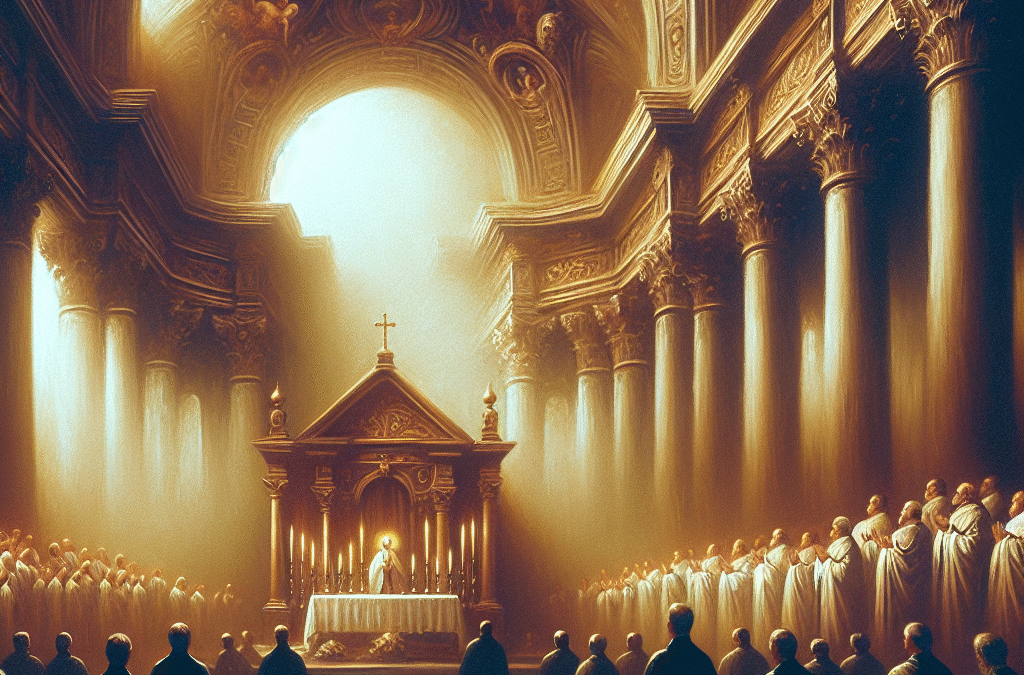
The air is heavy with the metallic smell of blood and the sharp smoke of burned villages. The Valley of Shaveh, the Valley of the King, lies south of Jerusalem — a wide open plain that has witnessed countless conflicts. The ground is torn by chariot wheels and trampled by armies. To the north, the Canaanite city-states are still smoking. Four eastern kings have swept through the land like a desert sirocco, plundering Sodom and Gomorrah and carrying people away captive, including Lot, Abram’s nephew.
Now the dust begins to settle.
One solitary figure returns victorious: Abram the Hebrew. With his 318 trained men and his allies, he has defeated the coalition kings in a bold night attack. He has recovered the people and the possessions. He stands in the valley, weary but resolute, the spoils of war laid out before him.
The king of Sodom comes out to meet him, eager to reclaim his people and willing to let Abram keep the wealth — a transactional offer, a king’s bargain.
Then another king appears.
He does not come from one of the cities of the plain. He does not arrive with an army or a demand. From Salem — Jerusalem, the city of peace — comes Melchizedek.
He is not a participant in the war. He is its theological judge.
He brings bread and wine.
Not weapons. Not treaties. But sustenance and sacrament.
He is a priest. He is a king. His name means “King of Righteousness.” His title is “King of Salem” — King of Peace. He has no recorded father. No recorded mother. No beginning of days. No end of life. He simply appears.
And he blesses Abram.
The victorious patriarch, the bearer of the promise, bows his head and receives a blessing. In response, Abram gives him a tenth of everything — the first recorded tithe in Scripture, given not to a relative, not to a tribal companion, but to this mysterious king-priest who seems to stand outside the normal categories of history.
The conflict is ancient, but painfully current.
It is the tension between two kingdoms.
The kingdom of Sodom: earthly, transactional, morally compromised, offering wealth in exchange for concession.
And the kingdom of Salem: heavenly, priestly, rooted in righteousness and peace, offering blessing and communion.
Every human soul stands in a valley of decision between these two offers: the wealth of the world or the blessing of the King-Priest. We are constantly tempted to make agreements with the kings of Sodom, to accept their treasures in exchange for our spiritual integrity.
Today, we study the enigma of Melchizedek.
We will discover how this shadowy and majestic figure from Genesis 14, unfolded in Hebrews 7, dismantles every human religious system and establishes the once-for-all, eternal, and superior priesthood of Jesus Christ.
This is not merely an ancient curiosity.
This is the foundation of our confidence before God.
I. The Historical Encounter: A Theophanic Moment in the Valley
Genesis 14:17–20
The Context of Chaos and the Arrival of Order
The narrative of Genesis 14 is unique. It feels like a fragment from the annals of the ancient Near East, naming obscure kings and recording a regional war. But its inclusion in Scripture is deeply theological.
It shows Abram not only as a nomadic receiver of promise, but as a powerful go’el — a redeemer — who rescues his family.
The world is in chaos.
Kings wage war. Cities are plundered. People are taken captive.
Into this chaos, Melchizedek appears.
He represents a divine order that stands above human conflict and judges it. His city, Salem — later Jerusalem — becomes the geographic and spiritual opposite of Sodom. One city is destined for fire. The other is destined for the temple of God.
Melchizedek’s appearance is a divine commentary on the event. He frames Abram’s military victory within a cosmic and covenantal context.
The Man Without a Lineage
The text is strikingly silent.
“Then Melchizedek king of Salem brought out bread and wine. He was priest of God Most High” (Genesis 14:18).
No “son of.” No tribal affiliation. No genealogy.
In a biblical world where lineage defines priesthood, kingship, inheritance, and legitimacy, this silence is thunderous.
It is intentional.
It marks him as different.
Melchizedek does not derive his authority from a human lineage. His priesthood is not based on descent from Aaron or Levi — who have not even been born yet. He stands outside the Levitical system, before it and above it.
This is the first clue to his typological significance: he points to a priesthood that is not grounded in human origin or human appointment.
The Actions of a True King-Priest
Melchizedek performs three actions.
First, he brings bread and wine.
This is not merely a meal for tired warriors. In the ancient world, and especially in later biblical theology, bread and wine become signs of covenant fellowship, communion, and sustaining grace. This is a priestly act of provision and communion. It foreshadows the final covenant meal.
Second, he is priest of God Most High.
The title is crucial. El Elyon means God Most High, Possessor of heaven and earth. Melchizedek declares the sovereignty of the one true God over all nations, even over the pagan kings Abram has just fought.
Abram later uses this same title when speaking to the king of Sodom, showing that he has embraced Melchizedek’s theology. Melchizedek’s priesthood is universal, not tribal.
Third, he blesses Abram.
The greater blesses the lesser. By blessing Abram, Melchizedek affirms his spiritual superiority over the father of the faithful. And he blesses him in the name of El Elyon, attributing Abram’s victory to God.
The blessing recognizes God as the source of the victory and aligns Abram’s success with the divine order of creation.
Abram’s Response: The Tithe of Everything
Abram’s response is immediate and profound.
He gives Melchizedek “a tenth of everything.”
In the ancient Near East, and later in Israel, tithing was an act of recognition and submission. It acknowledged the superior status of the recipient, often as king, priest, or divine representative.
By giving a tithe to Melchizedek, Abram — the covenant bearer — recognizes that this king-priest holds a divinely authorized position above him.
The writer of Hebrews will seize this detail with theological precision: Levi, the ancestor of the Aaronic priesthood, was still “in the body of his ancestor” Abraham when this tithe was paid. Therefore, the Levitical priesthood itself, through Abraham, submitted to and was shown inferior to the order of Melchizedek.
II. The Theological Explosion: Hebrews 7 and the Melchizedekian Priesthood
The book of Hebrews is a masterful sermon on the supremacy of Christ and the New Covenant over the Old. In chapter 7, the Holy Spirit, through the author, returns to the brief scene in Genesis 14 and opens it wide, revealing its Christological meaning.
Decoding the Name and the Title
The author immediately interprets the symbolism.
First, the name Melchizedek means “king of righteousness.” Then, his title “king of Salem” means “king of peace.”
This is not incidental.
Righteousness and peace are essential attributes of the kingdom of God and the work of the Messiah. The kingdoms of men seek peace through compromise, conquest, or control. God’s King establishes peace through righteousness.
Melchizedek is a living parable of the Messiah’s mission: a King whose righteousness produces true peace.
The Deliberate Silence: A Theology of “Without”
This is the heart of Hebrews 7.
Melchizedek is described as without father or mother, without genealogy, without beginning of days or end of life, resembling the Son of God, and remaining a priest continually.
This does not necessarily mean that Melchizedek was an eternal being or a pre-incarnate appearance of Christ. The emphasis is on the scriptural record. The Torah deliberately omits his genealogy, birth, and death.
Why?
So that he can serve as a perfect type — a divinely intended foreshadowing — of Jesus Christ.
The Aaronic priests had to prove their genealogy with precision. Their priesthood began with birth, was regulated by descent, and ended with death.
Jesus, like Melchizedek, has a priesthood that is not based on Levitical descent. He comes from the tribe of Judah. His priesthood is eternal, based not on ancestral qualification, but on the power of an indestructible life.
The silence of Genesis proclaims the permanence of Christ’s priesthood.
The Argument of Superiority
The logic of Hebrews 7 is sharp.
First, consider the greatness of Melchizedek. Abraham, the patriarch, gave him a tenth of the spoils.
Second, the Levitical priests, who later receive tithes from the people, were in a sense represented in Abraham. Since Abraham paid tithes to Melchizedek, and Levi was still in Abraham’s body, the Levitical priesthood itself acknowledged the superiority of Melchizedek.
Third, the lesser is blessed by the greater. Abraham was blessed by Melchizedek. Therefore, the priestly system that descends from Abraham is inferior to the order of Melchizedek.
This is a devastating argument, drawn from the Torah itself, against anyone who would cling to the Levitical system as final.
The Need for a New Priesthood
The author then delivers the decisive blow.
If perfection — full access to God, true cleansing of the conscience, final reconciliation — could have come through the Levitical priesthood, why would God announce another priest in the order of Melchizedek?
The very prophecy of Psalm 110:4 proves that the Levitical system was temporary and inadequate.
A change in priesthood requires a change in the law that regulates that priesthood. The old commandment, based on Levitical descent, is set aside because it could not bring perfection. But a better hope is introduced, through which we draw near to God.
That better hope is Jesus, our Melchizedekian Priest.
The Oath and the Eternal Guarantee
Here is the glorious climax.
The Levitical priests became priests without a divine oath. But Christ became priest with an oath from God Himself.
This means that Jesus is the guarantee of a better covenant. He is the living pledge, the divine assurance, that this covenant will never fail.
He always lives to intercede.
Levitical priests died, and their work ceased. Christ’s resurrection life means His intercession for us is perpetual and effective.
The Perfect High Priest
Hebrews summarizes Him majestically.
He is holy, blameless, pure, set apart from sinners, exalted above the heavens.
Unlike earthly priests, He does not need to offer sacrifices daily, first for His own sins and then for the sins of the people. He offered Himself once for all — one final, sufficient, perfect sacrifice.
This is the foundation of our salvation.
Not the religious effort of man, but the finished sacrifice of God.
III. Worldview Analysis: The King-Priest Against the Spirit of the Age
The priesthood of Melchizedek, fulfilled in Christ, stands in sharp contrast to every human system of approaching God.
Against Hedonism: The Way of Sodom
The offer of the king of Sodom was simple: “Give me the people and keep the goods for yourself.”
This is the hedonistic bargain.
It promises autonomous gain, wealth without responsibility, pleasure without covenant. It is the spirit of “take what you can, because you deserve it.”
Melchizedek offers something entirely different: bread, wine, and blessing — spiritual sustenance and peace from a higher source.
Christ, our Melchizedek, does not offer the spoils of Sodom. He offers His body and His blood. He offers true nourishment. He offers the blessing of righteousness and peace.
The choice remains before us: the fleeting wealth of Sodom or the eternal blessing of Salem.
Against Stoicism and Moralism: The Way of Self-Achievement
Stoicism teaches detachment and self-sufficient virtue. Moralistic religion teaches that we can make ourselves acceptable to God through effort, discipline, lineage, or moral record.
A misunderstood Levitical system could become this.
But Melchizedek has no genealogy. His priesthood is not achieved or inherited in a merely human sense. He is appointed by God.
So it is with Christ.
We do not become righteous before God through our religious family, our moral record, or our philosophical self-control. We are declared righteous through the oath of God, by a Priest who stands outside and above our system.
Not the moral record of man, but the priestly declaration of God.
Against Spiritual Consumerism
Modern religion often treats God like a heavenly vending machine or a therapeutic resource. We seek blessing, peace, and provision on our own terms.
We even tithe expecting a return.
But Abram did not tithe in order to receive a blessing. He tithed after receiving the blessing, as an act of worship before one greater than himself.
Our approach to Christ must be the same.
We do not come to Him merely to obtain things.
We come to Him because He is the King-Priest, the source of every blessing. We offer Him our all — our “tenth of everything” — in response to who He is.
IV. Application: Living Under the Eternal King-Priest
How does this ancient mystery change our lives on a Monday morning?
It gives us an unshakable foundation for faith and a new pattern for living.
Legacy Point 1: Your Access to God Is Guaranteed by an Oath, Not by Your Feelings
When you feel unworthy to pray, when your conscience condemns you, remember your High Priest.
His priesthood does not depend on your spiritual genealogy or daily performance. It rests on the unchanging oath of God.
You can approach the throne of grace with confidence because Jesus, your Melchizedek, is there.
Protocol: When you feel distant from God, declare out loud: “I draw near to God on the basis of the eternal priesthood of Christ, not on the basis of my temporary condition.”
Legacy Point 2: Your Righteousness Is a Kingdom Grant, Not a Personal Achievement
You are not striving to become the King of Righteousness.
You have been brought into the kingdom of the King of Righteousness.
Your standing before God is not your flawed righteousness, but the perfect righteousness of your King-Priest credited to you.
This frees you from the exhausting cycle of self-justification.
Protocol: Reject the voice of the king of Sodom when he offers you bargains based on your works. Receive daily the bread and wine of Christ’s finished work.
Legacy Point 3: Your Life Is Sustained by Communion, Not by Conquest
Abram had just returned from military victory, but his true sustenance came from the bread and wine of the priest.
Our culture tells us to conquer, perform, accumulate, and achieve in order to feel sustained.
The order of Melchizedek tells us that we are sustained by communion with our King-Priest.
Regular participation in His presence — through prayer, Scripture, worship, and the Lord’s Supper — is our true nourishment.
Protocol: Prioritize communion over conquest. Let your spiritual disciplines be moments of receiving from your King-Priest, not tasks performed to earn favor.
Legacy Point 4: You Serve in the Lineage of a Royal Priesthood
Melchizedek was both king and priest.
In Christ, you are part of a royal priesthood.
You are called to exercise royal authority over sin and the enemy in your life, and priestly ministry through intercession and blessing toward others.
You carry His authority and His heart.
Protocol: Move through your world not merely as a consumer, employee, or survivor, but as an ambassador of the King of Peace, offering blessings of grace and truth.
Epic Conclusion: Behold Your Priest
The study of Melchizedek is not an archaeological curiosity.
It is a revelation of the heart of the gospel.
Every religion asks the same question: How can a sinful person draw near to a holy God?
The Levitical system gave a temporary, symbolic, and ultimately insufficient answer: through the blood of animals offered by sinful and mortal priests.
It was a shadow.
But in the fullness of time, the Substance appeared.
Jesus Christ, the Son of God.
Born without an earthly father. Eternal in His divine sonship. The King of Righteousness who alone can make us righteous. The King of Peace who made peace through the blood of His cross.
A Priest not from Levi, but from Judah.
A royal Priest.
A Priest who did not need to offer sacrifice for Himself, because He was holy, innocent, and undefiled.
A Priest who offered not a goat or a bull, but His own perfect self.
A Priest who did not minister in an earthly copy of the temple, but entered heaven itself, into the very presence of God.
A Priest whose ministry did not end with death, but continues forever in the power of an endless life.
A Priest established not by a law of fleshly requirement, but by the solemn and unbreakable oath of Almighty God.
This is your High Priest.
He is not distant.
He is not waiting for you to clean yourself up.
He is interceding for you right now.
His once-for-all sacrifice is eternally sufficient. His blessing is greater than any wealth Sodom can offer.
When you feel the weight of your sin, look to Melchizedek — look to Jesus.
See the King-Priest who has dealt with it all.
See the One who blesses you with a righteousness and peace the world can never give.
Your hope, your confidence, and your eternal life are secure in Him.
He is the anchor for your soul, sure and steadfast.
Behold your King. Behold your Priest.
Worship, and live in the freedom of His eternal order.
Hebrews 7:25–26
Therefore, He is able to save completely those who come to God through Him, because He always lives to intercede for them. Such a High Priest is exactly the one we needed: holy, blameless, pure, set apart from sinners, and exalted above the heavens.
Série: Fundamentos da Fé / Texto Bíblico: Gênesis 14:17-20; Hebreus 7:1-28 (NVI) / Tempo Estimado de Leitura: 15 minutos
Postagens/Posts/Publicaciones
- “Is It God or Is It Just My Head?” The Ultimate Guide to Stop Guessing and Start Discerning
- “Show Me Your Glory”: The Mystery of the Cleft of the Rock and the Safe Place in Jesus
- A Kenosis: The Emptying of Glory (Philippians 2)
- Anxiety and Faith: Is it a sin to take medication or go to therapy? What the Bible really says
- Celestial Breaking News: “New Year” Doesn’t Exist in the Bible? A Deep Investigation into the Theology of New Beginnings
- Celestial Breaking News: The Day Heaven Invaded Earth (The True Story of Christmas You Never Heard)
- Christmas Investigation: Does the Bible Reveal the Exact Day Jesus Was Born? (The Mystery of Tabernacles)
- Church or Cult? The Ultimate Biblical Guide for the New Convert to Find a Safe Spiritual Home
- Corinth: Sacred Monday (Tentmaker’s Work)
- Ephesus: The Theater of Shadows (Spiritual War and Culture)
- Ephesus: The Theater of Shadows (Spiritual Warfare and Culture)
- First Steps with Jesus: A Biblical Guide to Start Your Journey of Faith
- From Failure to Rock: The Denial and Restoration of Peter.
- From the Pit to the Palace: When God’s Presence Feels Like Absolute Silence
- Fruit vs. Gifts: The Priority of Character
- God’s Radar: Integrity and the Gaze of God (2 Chr 16:9)
- Grace in Lo-debar: The King’s Call (Mephibosheth / 2 Samuel 9)
- I Converted, But I Sinned Again: The Liberating Truth About Your Internal Struggle
- I Find Reading the Bible and Praying Boring: How to Overcome Spiritual Boredom and Build Consistency
- Jerusalem/Rome: The Compass (The End of the Race)
- Justification: The Courtroom of Grace
- Melchizedek: The King Without Genealogy
- Nicodemus: The Theologian in Darkness (The New Birth)
- Real Life #1: “How to Share Jesus with My Family Without Starting World War III” — The Ultimate Guide to Home Evangelism
- Real Life #2: “Do I Really Need to Get Baptized? What Really Happens in the Water” — The Ultimate Guide to the Public Wedding with Christ
- Real Life #3: “Did God Call Me? How to Discover My Purpose Without Becoming a Pastor” — Ending the Sacred-Secular Divide
- Real Life #4: “Christian Dating vs. Hookup Culture: The Survival Manual for Singles” — Purity, Purpose, and the Physics of Being Unequally Yoked
- Real Life #5: “Tithes and Offerings: Is God Broke or Am I Greedy?” — Money as a Spiritual Thermometer
- Silence in Chaos: Why Having Faith Doesn’t Make You Immune to Anxiety (And How to Find Real Peace)
- Silence is Not Absence: A Deep Guide to Resetting Your Frequency and Finding the Overflow of Purpose
- Spiritual Detox #1: “I Accepted Jesus, Now My Problems Will End” — The Big Lie and the True Promise
- Spiritual Detox #2: “Do I Have to Cut Off Non-Christian Friends?” — The Definitive Guide to the “Holy Bubble”
- Spiritual Detox #3: “Christians Don’t Get Depressed?” — Breaking the Mental Health Taboo in the Church
- Spiritual Detox #4: “Can the Devil Read My Thoughts?” — The End of Paranoia and True Spiritual Authority
- Spiritual Detox #5: “I Don’t Feel God, So He’s Not Listening” — The Danger of Goosebump-Based Faith
- Spiritual Detox #6: “If I Sin, Does God Walk Away and Stop Loving Me?” — The Survival Guide for the “Spiritual Hangover”
- Spiritual Detox #7: “Do I Have to Become a Boring Christian?” — The End of the ‘Do’s and Don’ts’ List and True Holiness
- Start Here: 7 Days to Hear God (Reading John)
- The Abyss of Glory: The Depth of the Riches (Romans 11:33).
- The Anatomy of a Heart: Why Did God Love Such an Imperfect Man So Much?
- The Art of Abiding: Prayer, Discipleship, and the Secret of Consistency
- The Art of Provocation: Communion and Mutual Encouragement in Hebrews 10:24
- The Art of Provocation: Communion and Mutual Encouragement in Hebrews 10:24
- The Crimson Mystery: The Theology, Legality, and Power of “Pleading the Blood”
- The Dungeon: The Winter of the Soul (Solitude/2 Timothy)
- The Emmaus Bread: Eyes Opened in Communion (Luke 24).
- The Eternity Code: Forensic Evidence That the Bible Is the Word of God
- The Final Metanoia: What It Really Means to Have the Mind of Christ
- The Great Discovery of December 31st: The End of Waiting (The Kingdom is Now)
- The Great Plan: The Architecture of Rescue (When the Fall Meets Grace)
- The Great Plan: Understanding the “Exchange” That Changes Everything
- The Importunate Friend: A Theology of Persistence
- The Incomparable #1: “The Terrorist of Tarsus: How God Turns His Worst Enemy Into His Greatest General”
- The Incomparable #10: The Last Breath — The Death of the Servant vs. The Death of the Atheist (Final Special)
- The Incomparable #2: “The Arabian Desert: Why Does God ‘Hide’ Those He Plans to Use?” — The Secret Power of Anonymity
- The Incomparable #3: The Fight with Barnabas and the Cost of Leadership
- The Incomparable #4: When Heaven Says “No” (The Frequency of the Spirit)
- The Incomparable #5: The Overflow — When the Gospel Faces Culture (Paul in Athens)
- The Incomparable #6: Silence in Chaos — The Theology of the Shipwreck (Paul in Acts 27)
- The Incomparable #7: The Art of Letting Go — The Radical Theology of Forgiveness (Paul and Philemon)
- The Invitation of the Maimed: The Parable of the Great Banquet
- The Invitation of the Maimed: The Parable of the Great Banquet
- The Iron Mask: Why We Feel Like a Fraud and How to Cure Spiritual Imposter Syndrome
- The Judgment of the Nations: The Sheep and the Goats
- The Kairos of God: Sovereignty Over Time in Eternity
- The Logic of Blood: Why was Jesus’ death the only solution?
- The Mirror: The Death of the Slave, The Birth of the Son
- The Orphan Syndrome: Why Do You Keep Acting Like a Slave When You Already Have the House Keys?
- The Place of the Sinner: The Alabaster Jar (Luke 7).
- The Prince, The Shepherd, and The Deliverer: When the Desert Is the Only School
- The Prison of Resentment: How to forgive someone who never said “I’m sorry”
- The Rich Young Ruler: The Tragedy of Almost-Salvation
- The Samaritan Woman: The Forgotten Jar at the Well
- The School of Prayer: How to Learn to Speak the Language of Heaven
- The Seal of the Spirit: Pledge and Property
- The Secret of the Secret Place: The Intimacy that Pleases God (Martha and Mary)
- The Shrewd Manager: Investing in Eternity
- The Sound of Silence: What God Was Doing When He Stopped Speaking
- The Tabernacle: The Engineering of Presence
- The Table in the Wilderness: The Valley of the Shadow (Psalm 23).
- The Table of Betrayal: The Dipped Bread (Judas and Rejected Grace)
- The Table of Betrayal: The Dipped Bread (Judas and Rejected Grace)
- The Ten Virgins: The Danger of Borrowed Oil
- The Terror of God (The Invisible War)
- The Upside-Down Kingdom: Why Jesus’ Logic Offends Our Human Logic
- The Widow of Nain: When Two Processions Meet
- Tongues of Fire or Strange Fire? The Gift of Tongues, Paul, and the Ghost of Montanism
- When Heaven is Silent: A Survival Guide for the “Dark Night of the Soul”
- Zacchaeus: The Tree of Curiosity