


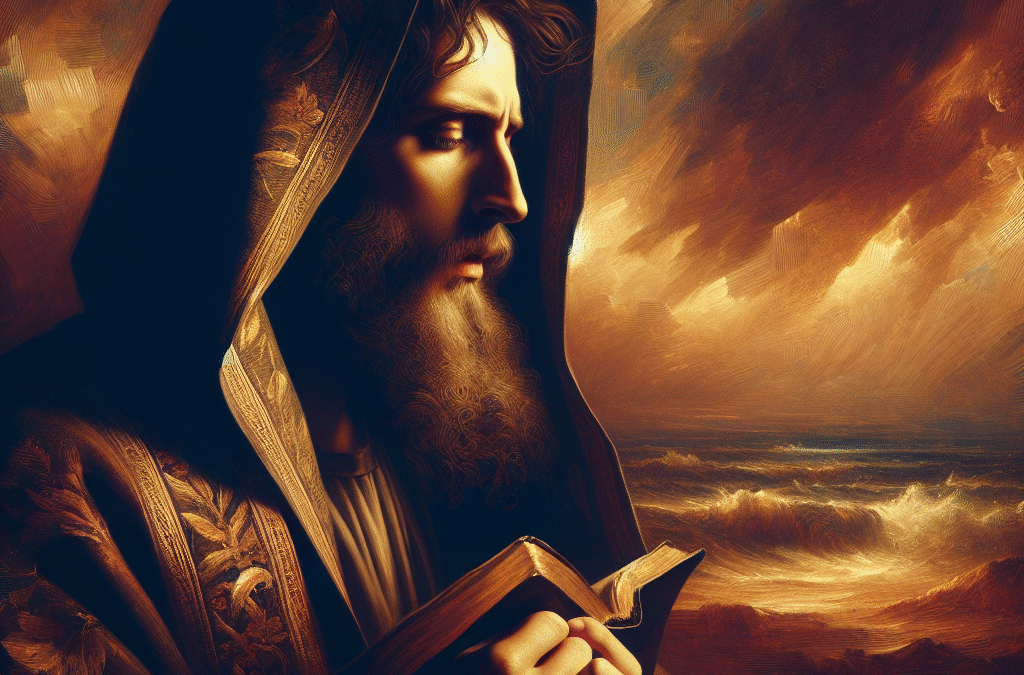
Imagine the scene.
The arid wind from the Judean wilderness sweeps through the streets of Jericho. Dust rises, clinging to the robes of the pressing crowd. The sun beats down on the sycamore trees, casting long, jagged shadows on the cobblestones. The air is thick with anticipation, for Jesus of Nazareth is passing through. The city, a lush oasis of palms and balsam trees, is a stark contrast to the spiritual barrenness of its tax collectors. Among the throng, a short, wealthy man named Zacchaeus scrambles for a vantage point. He has heard rumors of this Teacher—of healings, of forgiveness, of a Kingdom where tax collectors and sinners are welcomed. His heart races not merely with curiosity, but with a desperate, unnamed longing. He cannot see over the shoulders of the righteous. So he does something undignified: he climbs a sycamore tree. The crowd sneers. A chief tax collector, a wealthy collaborator with Rome, clings to a tree like a child. Today, we study Zacchaeus: The Tree of Curiosity. We will discover how the scandal of grace meets the desperation of a man trapped between wealth and emptiness, and how true salvation reshapes the ledger of our integrity.
I. The Context of Hunger: The Curse of Wealth and the Cry of the Poor
Before we ascend the sycamore, we must understand the soil in which it grew. Jericho was a wealthy city, a center for trade and the balsam industry. It was also a hub for tax collection. Zacchaeus was not a mere toll collector at a roadside booth. He is described as architelōnēs (ἀρχιτελώνης)—a chief tax collector. This means he oversaw a district of other tax collectors, franchising the Roman system. To understand him, we must see him through the eyes of first-century Judaism. The publicans were despised as traitors, thieves, and unclean. They were agents of pagan oppression, enriching themselves by extorting their own people. Jesus’ audience, the Pharisees and the crowd, saw Zacchaeus as the epitome of sin: wealthy, Jewish, but morally bankrupt.
The Psychological Cage of Status: Zacchaeus’s wealth was his identity, but it was a hollow throne. He lived in a state of perpetual tension. He had power, but no honor. He was respected by Rome, but shunned by his neighbors. The Stoic philosopher Seneca later wrote of the emptiness of wealth, but Zacchaeus experienced it in the raw. His soul was like the dried-up riverbeds of the Jericho valley—full of potential, yet thirsty for righteousness.
The Cultural Barrier: The Jewish prayer Tefillah included a blessing: “Blessed art Thou, O Lord, that Thou hast not made me a Gentile, a slave, or a woman.” Some traditions added, “or a publican.” To be a tax collector was to be cut off from the synagogue, from worship, from the hope of Israel. He was in a no-man’s-land: too Jewish for Rome, too Roman for the Jews. His curiosity about Jesus was not mere intellectual interest. It was a cry from the outer darkness.
The ‘Sycamore’ as Symbol: The tree Zacchaeus climbed, the sykomorea (συκομορέα), was a hardy, low-branching fig-mulberry. It was a tree of the common people, not a majestic cedar. By climbing it, Zacchaeus accepts his own humility. He is willing to look foolish. This is the first act of repentance: the willingness to be seen as you really are. The tree becomes a pulpit of curiosity, a throne of desperation.
II. The Scandal of the Gaze: Jesus Sees What Others Miss
Luke 19:5 records the pivotal moment: “When Jesus reached the spot, he looked up and said to him, ‘Zacchaeus, come down immediately. I must stay at your house today.’” The Greek verb anablepsas (ἀναβλέψας) means to look up with intent, to fix one’s gaze. Jesus does not glance. He sees. In a culture where the righteous averted their eyes from sinners, Jesus gazed directly into the soul of a corrupt man. This is the theology of the Divine Gaze.
The Sovereignty of Divine Initiative: Zacchaeus thought he was the seeker, climbing to find a glimpse of the Master. But Jesus reveals that the true seeker was God. “I must stay at your house today,” Jesus says. The word dei (δεῖ) implies divine necessity. It is not a suggestion. Salvation is not found by human striving; it is found when the Shepherd finds His sheep. Zacchaeus did not know his own need until Jesus named it. This overturns the secular myth of self-help. We do not climb to God; God descends to us.
The Breaking of Taboos: Entering a tax collector’s home rendered a pious Jew ritually unclean. The guests would be polluted by the stolen goods. Jesus, by inviting Himself, shatters the social contract. He announces that the Gospel is not for the clean, but for the sick. This is a direct assault on the Pharisees’ worldview, which equated wealth with blessing and poverty with curse. Here, a wealthy sinner is blessed not for his wealth, but for his poverty of spirit.
The Name as a Key: Jesus calls him by name. He does not say “Hey, tax collector.” He says “Zacchaeus.” The name means “pure” or “innocent.” It is a prophetic irony. The man branded as impure is called by his name of destiny. In calling him, Jesus is declaring what is about to become true: purification through encounter. This is the power of the Lord’s voice: it creates what it names.
III. The Fire of Repentance: Joyful Restitution as the Proof of Salvation
The crowd grumbles: “He has gone to be the guest of a sinner.” While they murmur, a miracle unfolds in the house of the tax collector. Zacchaeus stands up—the Greek statheis (σταθείς) suggests a formal, decisive posture. He makes a declaration that shocks every listener: “Look, Lord! Here and now I give half of my possessions to the poor, and if I have cheated anybody out of anything, I will pay back four times the amount” (Luke 19:8).
The Language of Integrity: The verb apodidōmi (ἀποδίδωμι) means to give back, to restore, to fulfill an obligation. Zacchaeus is not doing a noble deed; he is doing justice. The Law of Moses required restitution for theft: one-fifth added if the stolen item was found (Leviticus 6:5). For sheep stolen and slaughtered, fourfold restitution was required (Exodus 22:1). Zacchaeus voluntarily exceeds the law. He doesn’t merely reimburse; he reconciles. He restores the broken shalom.
The Tree of Curiosity Bears the Fruit of Repentance: True salvation is not a secret transaction between the soul and God. It is a public re-ordering of life. Zacchaeus demonstrates what the Reformers called salvation by faith, but not a faith that is alone. His works do not earn salvation; they are the visible evidence of invisible grace. This refutes both Catholicism’s works-righteousness and cheap-grace Protestantism.
A Theology of Money and Sin: The money was the stronghold. Zacchaeus had built his life on extortion. The root sin was greed (pleonexia—πλεονεξία), an insatiable desire for more. But grace reorganized his assets. He didn’t just give away half; he committed to fourfold restitution. This is the Gospel’s inversion of Mammon. When Jesus is Lord, your checkbook becomes a confession. This is the concrete proof: the hands that once grasped now open to give.
IV. The Cosmic Implications: Salvation Comes to a Snared Son
Jesus declares the verdict: “Today salvation has come to this house, because this man, too, is a son of Abraham” (Luke 19:9). This is a radical statement. The crowd had excluded Zacchaeus. Jesus re-includes him.
Salvation as Restoration of Identity: The word sōtēria (σωτηρία) here is not just future forgiveness of sins; it is present deliverance. Salvation has “come” to the house. Zacchaeus is returned to his family tree. He is a son of Abraham—not by works, but by faith. This is Abraham’s true lineage: a sinner justified by trusting God’s promise.
The Misunderstanding of the Pharisees: The Pharisees believed they were the sons of Abraham by birth. Jesus redefines kinship. A son of Abraham does the works of Abraham, who left his home, followed God, and believed. Zacchaeus, by leaving his wealth, acts more like Abraham than the grumbling crowd. His actions prove his faith.
The Ultimate Purpose of the Son of Man: Jesus concludes the pericope with a mission statement: “For the Son of Man came to seek and to save the lost” (v. 10). Zacchaeus was lost in a sea of coins, lost in a tree of curiosity, lost in the crowd of the spiritually blind. Jesus sought him. This verse is the heartbeat of the Gospel: God does not wait for the found; He hunts the lost. The sycamore tree is the symbol of a lost humanity hanging above the abyss, and Jesus is the seeking Physician.
V. Worldview Comparison: The Tree of the Self vs. The Tree of the Cross
To fully appreciate Zacchaeus, we must contrast his solution with worldly philosophies:
Moralism: The Pharisee’s way. “Be good, give tithes, avoid tax collectors.” This system condemns Zacchaeus because he failed the external test. Moralism offers no power to change. It only judges.
Hedonism: The way of the world. “Climb the tree to see the celebrity. Accumulate wealth. Enjoy the spectacle.” Zacchaeus could have stayed in his wealth, but his heart hungered for more than a thrill.
Stoicism: The philosophy of self-control and detachment. Zacchaeus is not detached; he is passionately engaged. He risks his reputation for a glimpse of hope. Stoicism would have told him to be indifferent. The Gospel tells him to be desperate.
The Gospel: It is the only path that addresses both the guilt of sin and the power of sin. Zacchaeus is not told to climb harder; he is told to come down. He responds with joy, not duty. His restitution is the fruit of delight, not obligation. This is the theology of overflow: the heart transformed by grace cannot help but pour out justice.
Application: Living as a Tree-Climber and a Restorer
How does this ancient text shape our Monday mornings? Here are four protocols for the disciple:
Cultivate Holy Curiosity: If your soul is stagnant, ask yourself: “What am I eager to see?” Do you chase entertainment or the face of Jesus? Climb the tree of Scripture, prayer, and community. Let your curiosity drive you to undignified pursuit.
Examine the Sycamores of Your Life: What “trees” (systems, relationships, habits) are you hiding in? Are you using them to conceal shame or to facilitate encounter with Christ? The tree is a vehicle, not a destination.
Restore What You Have Broken: If your salvation has not changed your financial ethics, has it changed you? Practice radical honesty. If you have wronged someone, go beyond what is required. Make restitution an act of worship. Let your generosity be a testimony to grace.
Rejoice in the Seeking Shepherd: Do not live as the “found” who forget the loss. Each morning, remember that Jesus saw you in your tree. He called you by name. Today, He invites Himself to your table. Let your joy be loud enough for the grumblers to hear.
Epic Conclusion: The Exaltation of Jesus Christ
Zacchaeus’ story ends with salvation, but it points to something grander. The Son of Man, who came to seek and save the lost, is the ultimate Zacchaeus. Jesus Christ, the sinless One, took on the form of a servant. He climbed the tree of the Cross—an ignominious death—not to satisfy His curiosity, but to satisfy divine justice. He was stripped of all wealth, mocked by the crowd, and cut off from the living. But through that cursed tree, He repaired the broken ledger of humanity. On the third day, He descended into the grave and ascended into glory. Now He calls you, not from a sycamore in Jericho, but from the right hand of the Father. He says, “Come down. I must stay at your house today.” Do not remain in your tree of pride or fear. Come down. Receive the Guest who brings salvation. And let your life be the proof: the restitution of a soul made whole, the treasure of the Kingdom spent to love the poor, and the name of Jesus glorified in every restored relationship.
“For the Son of Man came to seek and to save the lost.” (Luke 19:10, NIV)
Postagens/Posts/Publicaciones
- “Is It God or Is It Just My Head?” The Ultimate Guide to Stop Guessing and Start Discerning
- “Show Me Your Glory”: The Mystery of the Cleft of the Rock and the Safe Place in Jesus
- A Kenosis: The Emptying of Glory (Philippians 2)
- Anxiety and Faith: Is it a sin to take medication or go to therapy? What the Bible really says
- Celestial Breaking News: “New Year” Doesn’t Exist in the Bible? A Deep Investigation into the Theology of New Beginnings
- Celestial Breaking News: The Day Heaven Invaded Earth (The True Story of Christmas You Never Heard)
- Christmas Investigation: Does the Bible Reveal the Exact Day Jesus Was Born? (The Mystery of Tabernacles)
- Church or Cult? The Ultimate Biblical Guide for the New Convert to Find a Safe Spiritual Home
- Corinth: Sacred Monday (Tentmaker’s Work)
- Ephesus: The Theater of Shadows (Spiritual War and Culture)
- Ephesus: The Theater of Shadows (Spiritual Warfare and Culture)
- First Steps with Jesus: A Biblical Guide to Start Your Journey of Faith
- From Failure to Rock: The Denial and Restoration of Peter.
- From the Pit to the Palace: When God’s Presence Feels Like Absolute Silence
- Fruit vs. Gifts: The Priority of Character
- God’s Radar: Integrity and the Gaze of God (2 Chr 16:9)
- Grace in Lo-debar: The King’s Call (Mephibosheth / 2 Samuel 9)
- I Converted, But I Sinned Again: The Liberating Truth About Your Internal Struggle
- I Find Reading the Bible and Praying Boring: How to Overcome Spiritual Boredom and Build Consistency
- Jerusalem/Rome: The Compass (The End of the Race)
- Justification: The Courtroom of Grace
- Melchizedek: The King Without Genealogy
- Nicodemus: The Theologian in Darkness (The New Birth)
- Real Life #1: “How to Share Jesus with My Family Without Starting World War III” — The Ultimate Guide to Home Evangelism
- Real Life #2: “Do I Really Need to Get Baptized? What Really Happens in the Water” — The Ultimate Guide to the Public Wedding with Christ
- Real Life #3: “Did God Call Me? How to Discover My Purpose Without Becoming a Pastor” — Ending the Sacred-Secular Divide
- Real Life #4: “Christian Dating vs. Hookup Culture: The Survival Manual for Singles” — Purity, Purpose, and the Physics of Being Unequally Yoked
- Real Life #5: “Tithes and Offerings: Is God Broke or Am I Greedy?” — Money as a Spiritual Thermometer
- Silence in Chaos: Why Having Faith Doesn’t Make You Immune to Anxiety (And How to Find Real Peace)
- Silence is Not Absence: A Deep Guide to Resetting Your Frequency and Finding the Overflow of Purpose
- Spiritual Detox #1: “I Accepted Jesus, Now My Problems Will End” — The Big Lie and the True Promise
- Spiritual Detox #2: “Do I Have to Cut Off Non-Christian Friends?” — The Definitive Guide to the “Holy Bubble”
- Spiritual Detox #3: “Christians Don’t Get Depressed?” — Breaking the Mental Health Taboo in the Church
- Spiritual Detox #4: “Can the Devil Read My Thoughts?” — The End of Paranoia and True Spiritual Authority
- Spiritual Detox #5: “I Don’t Feel God, So He’s Not Listening” — The Danger of Goosebump-Based Faith
- Spiritual Detox #6: “If I Sin, Does God Walk Away and Stop Loving Me?” — The Survival Guide for the “Spiritual Hangover”
- Spiritual Detox #7: “Do I Have to Become a Boring Christian?” — The End of the ‘Do’s and Don’ts’ List and True Holiness
- Start Here: 7 Days to Hear God (Reading John)
- The Abyss of Glory: The Depth of the Riches (Romans 11:33).
- The Anatomy of a Heart: Why Did God Love Such an Imperfect Man So Much?
- The Art of Abiding: Prayer, Discipleship, and the Secret of Consistency
- The Art of Provocation: Communion and Mutual Encouragement in Hebrews 10:24
- The Art of Provocation: Communion and Mutual Encouragement in Hebrews 10:24
- The Crimson Mystery: The Theology, Legality, and Power of “Pleading the Blood”
- The Dungeon: The Winter of the Soul (Solitude/2 Timothy)
- The Emmaus Bread: Eyes Opened in Communion (Luke 24).
- The Eternity Code: Forensic Evidence That the Bible Is the Word of God
- The Final Metanoia: What It Really Means to Have the Mind of Christ
- The Great Discovery of December 31st: The End of Waiting (The Kingdom is Now)
- The Great Plan: The Architecture of Rescue (When the Fall Meets Grace)
- The Great Plan: Understanding the “Exchange” That Changes Everything
- The Importunate Friend: A Theology of Persistence
- The Incomparable #1: “The Terrorist of Tarsus: How God Turns His Worst Enemy Into His Greatest General”
- The Incomparable #10: The Last Breath — The Death of the Servant vs. The Death of the Atheist (Final Special)
- The Incomparable #2: “The Arabian Desert: Why Does God ‘Hide’ Those He Plans to Use?” — The Secret Power of Anonymity
- The Incomparable #3: The Fight with Barnabas and the Cost of Leadership
- The Incomparable #4: When Heaven Says “No” (The Frequency of the Spirit)
- The Incomparable #5: The Overflow — When the Gospel Faces Culture (Paul in Athens)
- The Incomparable #6: Silence in Chaos — The Theology of the Shipwreck (Paul in Acts 27)
- The Incomparable #7: The Art of Letting Go — The Radical Theology of Forgiveness (Paul and Philemon)
- The Invitation of the Maimed: The Parable of the Great Banquet
- The Invitation of the Maimed: The Parable of the Great Banquet
- The Iron Mask: Why We Feel Like a Fraud and How to Cure Spiritual Imposter Syndrome
- The Judgment of the Nations: The Sheep and the Goats
- The Kairos of God: Sovereignty Over Time in Eternity
- The Logic of Blood: Why was Jesus’ death the only solution?
- The Mirror: The Death of the Slave, The Birth of the Son
- The Orphan Syndrome: Why Do You Keep Acting Like a Slave When You Already Have the House Keys?
- The Place of the Sinner: The Alabaster Jar (Luke 7).
- The Prince, The Shepherd, and The Deliverer: When the Desert Is the Only School
- The Prison of Resentment: How to forgive someone who never said “I’m sorry”
- The Rich Young Ruler: The Tragedy of Almost-Salvation
- The Samaritan Woman: The Forgotten Jar at the Well
- The School of Prayer: How to Learn to Speak the Language of Heaven
- The Seal of the Spirit: Pledge and Property
- The Secret of the Secret Place: The Intimacy that Pleases God (Martha and Mary)
- The Shrewd Manager: Investing in Eternity
- The Sound of Silence: What God Was Doing When He Stopped Speaking
- The Tabernacle: The Engineering of Presence
- The Table in the Wilderness: The Valley of the Shadow (Psalm 23).
- The Table of Betrayal: The Dipped Bread (Judas and Rejected Grace)
- The Table of Betrayal: The Dipped Bread (Judas and Rejected Grace)
- The Ten Virgins: The Danger of Borrowed Oil
- The Terror of God (The Invisible War)
- The Upside-Down Kingdom: Why Jesus’ Logic Offends Our Human Logic
- The Widow of Nain: When Two Processions Meet
- Tongues of Fire or Strange Fire? The Gift of Tongues, Paul, and the Ghost of Montanism
- When Heaven is Silent: A Survival Guide for the “Dark Night of the Soul”
- Zacchaeus: The Tree of Curiosity